Showing 41 - 60 of 83 results
ANSTO analyses the performance of materials in extreme environments
ANSTO has unique facilities, capabilities and expertise to investigate materials in extreme environments for applications in energy systems, the defence industry and emerging space sector.
New capability supports advanced laser additive manufacturing
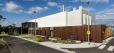
FAQs on the Mo-99 Manufacturing Facility
Frequently asked questions on the Mo-99 Manufacturing Facility and the ANSTO Nuclear Medicine project.
Fossils go nuclear
Pyrochlore transformation of defect fluorite?
Mathematical insights explain inconsistencies in experimental data: pyrochlore transformation into defect fluorite or not?
About the ANSTO Hackathon
Shorebirds 2024: Flight for Survival
An initiative for National Science Week 2024 the Shorebirds Competition addresses the 2024 theme for National Science Week, ‘Species Survival’ and provides unique cross-curricula learning for Australian primary students in Years 3 to 6.
ANSTO supports innovative industry process to minimise plastic waste and maximise feed stock for 3D printing
The characterisation of planetary materials
ANSTO provides a range of capabilities using neutrons, X-rays and infrared radiation to study the solids, liquids and gases that might be found in materials in our solar system and beyond.
The characterisation of planetary materials
ANSTO provides a range of capabilities using neutrons, X-rays and infrared radiation to study the solids, liquids and gases that might be found in materials in our solar system and beyond.
Common drug source of insights into formation of 'butterfly' crystals
Insights into the crystallisation process of twin crystals important for drug production.
Nuclear power technologies
Nuclear power is used as a reliable and clean energy solution in most OECD countries and many other parts of the world. Although it is banned in Australia, a number of government reviews are looking at current prohibitions on nuclear power.
Analysis of fingermarks with synchrotron techniques provide new insights
A new study by researchers from Curtin University using the infrared (IR) and X-ray fluorescence microscopy (XFM) beamlines at the Australian Synchrotron has provided a better understanding of the chemical and elemental composition of latent fingermarks.
Studying Western Australian caves to help us understand climate change
On average, there is now 17 per cent less rainfall across Western Australia’s south-western region than was recorded prior to 1970. This rainfall reduction has economic, social and environmental implications for the region, in particular for the growing capital of Perth, as well as water-dependent industries in the state.
Aiding the global research effort on COVID-19
Melbourne researchers map the structure of a key COVID-19 protein using the Australian Synchrotron
OPAL 2024 Shutdown
ANSTO's OPAL reactor is one of the world's most advanced and reliable research reactors today. To ensure we can continue operating OPAL safely and reliably and maximise utilisation, ANSTO must regularly carry out maintenance and upgrades.
Anonymised Review
ANSTO has agreed to participate in an Australian trial of a review of research infrastructure access proposals in which applicants remain anonymous to aid the removal of structural barriers to the career progression of Women in STEM.
Groundwater study
Using isotopes to understand saltwater intrusion of Rottnest Island groundwater
Restoring soil carbon
Restoring soil carbon can bring benefits for agricultural productivity and climate change mitigation.