Using nuclear techniques for coastal environments
IAEA Regional Training Course on coastal environments held at ANSTO for representatives from Asian Pacific.


Showing 41 - 60 of 82 results
IAEA Regional Training Course on coastal environments held at ANSTO for representatives from Asian Pacific.

ANSTO's Graduate Program develops the next generation of Australian business and science leaders, by providing the best and brightest postgraduate students with a two-year rotation cycle, tailored to match your talents, goals and interests.
ANSTO facilitating coordinated effort to find the nexus that leads to chronic kidney disease of unknown origin

Your students can analyse real research data from ANSTO scientists.
In January 2026, Mr Michael Quigley AM, ANSTO Board Chair, shared ANSTO's Statement of Intent with the Minister for Industry and Innovation, and Minister for Science.
3D models of multilayered structures on engineering scale from nanoscale damage profiles.
Guide to successful proposals and experiments at the Powder Diffraction beamline.
ANSTO provides access to specialised facilities and capabilities by application. Please ensure that you contact the relevant ANSTO scientist for advice before submitting a proposal.
On average, there is now 17 per cent less rainfall across Western Australia’s south-western region than was recorded prior to 1970. This rainfall reduction has economic, social and environmental implications for the region, in particular for the growing capital of Perth, as well as water-dependent industries in the state.
Access to a ‘window into the cell’ with University of Wollongong cryogenic electron microscope at ANSTO.
ANSTO's Chief Nuclear Officer shares insights on the safe management of Australia's nuclear waste.
Insights into the formation of deep river canyons mountain ranges in intra-tectonic plate areas by SAAFE Scholarship recipient and collaborators.
Stage 1 of the Stawell Underground Physics Laboratory was officially opened today. It will be home to multi-disciplinary scientists from five research partners who help us understand dark matter.
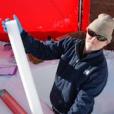
Dr Andrew Smith has just finished collecting ice cores and snow samples on the summit of Law Dome in Antarctica,