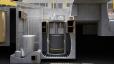
Advanced reactors
Advanced nuclear reactors, such as molten salt-based reactors and very high-temperature reactors provide a viable option within a future mix of energy systems.


Showing 401 - 420 of 1901 results
Advanced nuclear reactors, such as molten salt-based reactors and very high-temperature reactors provide a viable option within a future mix of energy systems.
The proof of concept for the approach used in the early development of the new gamma-ray imaging system has been published,
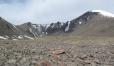
The application of cosomogenic radionuclides in the Earth sciences has provided the essential geochronological timing of continental and polar glacial history over the past few millions years, and revolutionised our understanding of the processes controlling landscape evolution on spatial scales of metres to kilometres.
Both the Australian Centre for Neutron Scattering and the National Deuteration Facility share in grants

Deuteration and nuclear techniques can contribute to the science of beauty.
The Waste Management Services group at ANSTO is now using a new automated storage and retrieval system (ASRS) that will enhance safety, access and efficiency.
ANSTO is a partner on the National Space Qualification Network (NSQN) led by the Australian National University (ANU) that will transform Australia into a world-leading space centre by enhancing facilities to test payloads, components, and hardware prior to their use in harsh environments of space.

Materials researchers focus on development, performance and in-service degradation of nickel-based superalloys, reinforced carbon-Carbon (C/C) composites, and ultra-high temperature ceramics (UHTC).

In collaboration with the French National Institute of Health and Medical Research (INSERM) and the French International Space Agency (CNES), ANSTO scientists are undertaking research on the radiobiological effects of secondary particles that are created when radiation interacts with the shielding on the International Space Station.
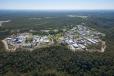
ANSTO is one of Australia’s largest public research organisations and is widely recognised as an international player in the field of nuclear science and technology.
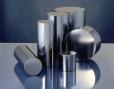
ANSTO is one of the world's leading providers of irradiation services for silicon ingots, which are used by the multimillion dollar electronics industry across Europe and Asia. Each year, ANSTO irradiates more than 50 tonnes of silicon.
Soft X-ray experiments used to characterise new thin film topological Dirac Semimetal.

Highlights of the Magnetism Project.

A new imaging technology developed at ANSTO makes it possible to image, identify and locate gamma-ray radiation in a safe and timely manner.
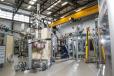
When an energetic ion beam hits a sample it will interact with the atoms through a number of very complex interactions. By detecting and measuring the reaction products resulting from the various interactions and their intensities, you can obtain quantitative data on the sample's constituent elements and their spatial distribution.
ANSTO has the capability to analyse heavy isotopes such as 129I, platinum group elements, 236U and Pu isotopes.