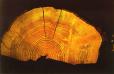
Radiocarbon dating
Radiocarbon dating is a well-known method for determining the age of materials up to the age of approximately 50,000 years.


Showing 401 - 420 of 618 results
Radiocarbon dating is a well-known method for determining the age of materials up to the age of approximately 50,000 years.
ANSTO physicist supports launch of new carbon ion therapy treatment service in Austria.
Researchers from the University of Wollongong have improved a high voltage cathode material to deliver structural stability and an unprecedented electrochemical performance for lithium-ion batteries (LIBs) in work that is extendable to other types of energy storage materials.
On behalf of Australia, ANSTO, the only nuclear reactor facility in Australia, supports the International Atomic Energy Agency (IAEA) to undertake its role in facilitating national, regional, and international efforts to enhance nuclear security, including measures to protect against nuclear terrorism.
Dharawal Mural tells an ancient story. Aboriginal and Torres Strait Islander viewers are advised that webpage contains images of people who have died.
Research on a rare type of superconducting intermetallic alloy
Researchers from UNSW have found an extraordinary material that does expand or contract over an extremely wide temperature range and may be one of the most stable materials known.
ANSTO hosted an online training workshop for the FNCA (Forum for Nuclear Cooperation in Asia) project Combating Food Fraud using Nuclear Technology (CFF) in early December.

Creating a safe, inclusive and respectful online community for all.
Research on the mechanism of cell death has insights to bring progress on neurodegenerative diseases and plant biosecurity.
Electron and X-ray diffraction techniques provide insights into material damage under stress-strain conditions.
Advanced X-ray techniques have revealed new structural details about the specific arrangement of atoms in conjugated polymers, an important class of materials that are used in LEDs, organic solar cells, transistors, sensors and thermoelectric power devices.
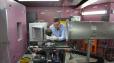
Neutron imaging or tomography creates a whole series of three-dimensional images of an object that can be reconstructed.

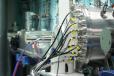
Guide to successful proposals and experiments at the Powder Diffraction beamline.

Jack the Super Prawn lives in the Barrier Reef and uses his powers to protect the environment. With JackVac, he cleans up rubbish and impurities in seawater. With JackCopter, he soars high into the air, where you wouldn't normally see a prawn. Of course, powers like that help Jack find and clear up waste plastic. But Jack's main job is to educate young readers.
The Australian Critical Minerals Research and Development Hub (the Hub) unites the expertise of top Federal science agencies: ANSTO, Geoscience Australia, and CSIRO with the aim of addressing technical challenges and drive collaborative research across the critical minerals value chain.
Radiocarbon dating of mud wasp nests was used as an indirect method of dating the Gwion Gwion style.
Exploring the interaction of polystyrene nanoplastics and blood plasma proteins.