

Showing 421 - 440 of 528 results
Senior Beamline Scientist (BioSAXS)
Role at ANSTO
Willandra Lakes Elders visit ANSTO to support groundbreaking Lake Mungo research
Earlier this month, ANSTO welcomed a delegation of Elders from the Willandra Lakes Region World Heritage site to its Lucas Heights campus. The visit marked a significant collaboration between Traditional Custodians and scientists working to uncover the environmental history of Lake Mungo.
Personalised cancer therapy
Research collaboration with University of Sydney focuses on a personalised approach to cancer treatment.
Using nuclear techniques to find suitable plants to remediate toxic environments

The future is BRIGHT
Melbourne

Melbourne
A possible world record: Studying thin films under extreme temperatures with reflectometry
A team of researchers from ANSTO and University of Technology Sydney have set a record by conducting thin film experiments at 1100 degrees C.
Two lectures from distinguished physicist
Dr Catalina Curceanu will explore exotic atoms and impossible phenomena in the universe.
An innovative way to deliver drugs using nanocrystals shows potential benefits
Monash University researchers have used advanced techniques at ANSTO to investigate the production of new, elongated polymer nanocapsules with a high payload of drug nanocrystals to potentially increase drug targetability, and also decrease dosage frequency and side effects.

Sydney
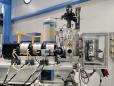
High-energy Heavy Ion Microbeam
The high-energy heavy-ion microprobe is used for the characterisation or modification of material properties at depths from approximately 1 micrometre to maximum depths of up to 500 micrometres from the material surface.
Science talk: photonics to shine a new light on cancer treatment
Insights in soil fertility can help guide more targeted fertiliser strategies for long-term soil management across Australia
Study revealed that the chemical forms of sulfur change when land is converted from undisturbed soils to cropping soils and forms of sulfur which bind strongly to the soil mineral particles remains far more stable.

Postdoctoral Research Fellow, Health research and Technology
Role at ANSTO
Mummified remains reveal breathing and movement in the ancient world of reptiles
An international team has published research in Nature today that identified the oldest known mummified remains of an exceptionally well-preserved terrestrial vertebrate, a 289-million-year-old reptile Captorhinus.
Research investigates low activation and low cost superconducting material for magnetic coils in next generation fusion reactors
Volunteer Week: Part one
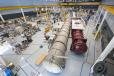
Australian Centre for Neutron Scattering
The Australian Centre for Neutron Scattering (ACNS) is a major research facility for neutron science that comprises a suite of neutron instruments with a range of techniques for scientific investigations in physics, chemistry, materials science, medicine and environmental science among other fields.