Primary School Tours - Sydney
Book a date with the Discovery Centre for your class.


Showing 421 - 440 of 2173 results
Book a date with the Discovery Centre for your class.

Shorebirds Competition 2021 results.
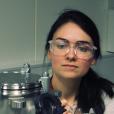
Danielle is currently the Senior Principal Scientist, who oversees strategic developments, managing, prioritising and facilitating team interactions, capital and asset management programs and leading improvement initiatives across the ANSTO Melbourne fa

Dr. Sue Brown is a Senior Radiochemist within the ANSTO Minerals business unit.



The BRIGHT Nanoprobe beamline provides a unique facility capable of spectroscopic and full-field imaging. NANO will undertake high-resolution elemental mapping and ptychographic coherent diffraction imaging. Elemental mapping and XANES studies (after DCM upgrade) will be possible at sub-100 nm resolution, with structural features able to be studied down to 15 nm using ptychography.

Unique landmark instrumentation and expertise are a hallmark of ANSTO’s sovereign capability, unavailable anywhere else in Australia. Our ability to identify the source of hazardous particulates in air, the age of water in aquifers and the detailed chemistry of toxic elements in complex soil and biota specimens are just some examples of ANSTO capability.
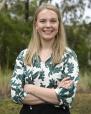
Giorgia is currently working as a graduate in Commercial Products and Services. Giorgia studied a dual degree in Arts and Science at the University of Queensland.


ANSTO Synroc technology provides a safe, secure matrix for the immobilisation and final disposal of radioactive waste.
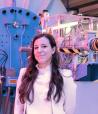
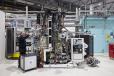
Soft x-rays are generally understood to be x-rays in the energy range 100-3,000 eV. They have insufficient energy to penetrate the beryllium window of a hard x-ray beamline but have energies higher than that of extreme ultraviolet light.

A large team of ANSTO scientists in collaboration with University of Wollongong researchers has developed a new hybrid technique that enhances the effectiveness of a cutting-edge form of radiation therapy for advanced cancer.


CORIS360® GNI images gamma-ray and thermal neutron radiation sources, delivering an unprecedented ability to detect, localise, and identify nuclear materials.

For over 45 years, ANSTO has provided consultancy and process development services to the mining and minerals processing industries in Australia and globally.
Developed by ANSTO’s predecessor the Australian Atomic Energy Commission (known as the AAEC) in the late 1960s, the Technetium-99m Generator revolutionised nuclear medicine imaging in Australia by enabling imaging procedures to be performed not only in major capital cities but throughout regional and rural Australia.
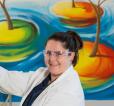
Kellie-Anne Farrawell is the Tritium Facility Officer who works within the Isotope Tracing in Natural Systems platform within Nuclear Science and Technology.