Nuclear medicine congress
Congress marks watershed moment for nuclear medicine and ANSTO


Showing 441 - 460 of 1023 results
Congress marks watershed moment for nuclear medicine and ANSTO
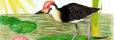
Shorebirds Competition 2022 results.
Investigators have verified and quantified the relationship between the Earth’s land biosphere and changes in temperature and provided evidence that temperature impacts the cycling of carbon between land, ocean and the atmosphere.

Highlights on the Water Isotope Network project.
The most important data from NASA’s first crewed Artemis mission may not be its photographs, but the radiation measurements that will shape how humans work and survive beyond travel farther from Earth’s magnetic shelter safely.

Research can improve both food processing and food product development.

Highlights of the Energy Materials Project.

We are part of the Planetary Science community in Australia
Collaboration finds that old carbon reservoirs are unlikely to cause a massive greenhouse gas release in a warming world.

The Australian Synchrotron provides funding support for successful beamtime applicants in the form of travel funding and/or onsite accommodation. Travel funds granted are to be used solely to cover the majority of the cost to travel to the AS facility. The User Office will book accommodation for interstate user groups at the onsite AS Guesthouse.

Radiocarbon analyses on corals from two sites in Australian waters of the southwest (SW) Pacific has indicated significant changes in ocean circulation in the Pacific and large climate variability during the early to mid-Holocene period (8,000-5,400 years ago).
Virtual activities celebrating the benefits of nuclear science and technology held for National Science Week
Researchers from ANSTO and NASA’s Jet Propulsion Laboratory have uncovered the likely mineral composition of Saturn’s largest moon, Titan, revealing a world of exotic organic crystals unlike any found on Earth.

The National Deuteration Facility offers access to deuterated molecules prepared by both in vivo biodeuteration and chemical deuteration techniques.