Sharing expertise on next generation batteries
ANSTO neutron diffraction scientist was among the experts presenting on next-generation batteries at South Korean conference.


Showing 461 - 480 of 1651 results
ANSTO neutron diffraction scientist was among the experts presenting on next-generation batteries at South Korean conference.
You are invited to submit to the various awards
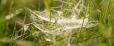
The Australian crab spider Saccodomus formivorus is the only spider known to weave a unique basket-like web; however, the key to its remarkable design and robust structure is unknown.
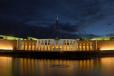
On the 10th of October 2025, the Minister for Industry, Science and Technology provided his Statement of Expectations to ANSTO.
Combined users meeting highlights how ANSTO expertise and infrastructure can assist research community.
A desire to give people around the world greater access to the benefits of nuclear medicine is behind Robert Raposio and his research into producing radioisotopes in more efficient, cheaper and sustainable ways.
ANSTO shared plans for an Innovation Precinct in southern Sydney at a breakfast event.
Applications are now being accepted for the Industry foundations Scholarship.
Two of Australia’s leading science organisations, ANSTO and the National Measurement Institute (NMI), which share areas of common interest in both measurement and research, signed a MOU formalising collaboration on 6 March 2019.

Learn. Create. Innovate

Ultra-flexible electronics has many potential applications within areas such as for example the military, healthcare and energy.
Two Australian scientists have been appointed to assist with the development of a $500 million-dollar synchrotron facility in Mexico, the first and largest project of its kind.
A specialist in particle therapy treatment planning from the Mayo Clinic in the US, Professor Chris Beltran, recently visited ANSTO for an exchange for information.

The scientific and technical staff at the Centre for Accelerator Science have a comprehensive range of skills and abilities in the operation of accelerator instruments and techniques,
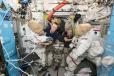
This program explores the mechanism and outcome of the interaction of radiation on biological systems in order to improve our understanding of the impact of radiation on the brain, optimise radiotherapy and develop mitigation strategies for space travellers.