X-ray technique used in research on early life forms
Singapore researchers publish findings of link between proteins of archaea and eukaryotes despite being separated by more than 2 billion years of evolution.


Showing 501 - 520 of 579 results
Singapore researchers publish findings of link between proteins of archaea and eukaryotes despite being separated by more than 2 billion years of evolution.
Successful synthesis of nano-material that improves catalytic converter efficiency.
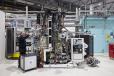
Soft x-rays are generally understood to be x-rays in the energy range 100-3,000 eV. They have insufficient energy to penetrate the beryllium window of a hard x-ray beamline but have energies higher than that of extreme ultraviolet light.
Nuclear engineer, Robert Mardus-Hall, with his research partner Andrew Pastrello, are developing nuclear power based solutions for space missions to the Moon and Mars.
Doping with transition metals produced stability in bismuth oxide.
Doping with transition metals produced stability in bismuth oxide.
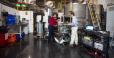
Taipan is used to study the collective motion of atoms, phonons and magnons in materials, and phase transitions and processes involving thermal energy.
Collaboration across the Tasman has enabled Australian and New Zealand researchers and scientists to shed light on a protein involved in diseases such as Parkinson’s disease, gastric cancer and melanoma.
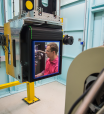
The High Performance Macromolecular Crystallography beamline will enable the study of very small (sub-5 micrometre) or weakly diffracting crystals, providing a state-of-the-art high-throughput facility for researchers. MX3 will be able to study the structures of large proteins and protein complexes for virology, drug design and industrial applications via goniometer mounted crystals, in-tray screening, or via serial crystallography methods.
Research makes it possible to assess if and how rocky coasts, which make up the majority of the world’s coasts including Australia and New Zealand, will respond to changes in marine conditions.
ANSTO part of consortium funded by Federal Government to develop new radioimmunological drugs.
ANSTO research focuses on an advanced form of cancer treatment under consideration in Australia.
Best and brightest recognised in 2017 research awards
Young physicist in training to become a surrogate inspector for Comprehensive Nuclear Test Ban Treaty Organisation.