Research may lead to more effective anti-tumour drug
High intensity X-ray beam provides insights into the activity of natural killer cells.


Showing 501 - 520 of 543 results
High intensity X-ray beam provides insights into the activity of natural killer cells.
The Australian Nuclear Association (ANA) has awarded Lubi Dimitrovski, former Manager, ANSTO Waste Operations (1995-2012) and former General Manager Nuclear Operations (2013-2018), its Award for 2022 in recognition of his leadership role in radioactive waste management in Australia.
The 3D structure of a fungal and plant enzyme solves 50-year-old mystery.
Researchers have demonstrated a solar-driven approach to convert glycerol, a low-value by-product of biodiesel production, into hydrogen and higher-value chemicals
Retrieving an Antarctic ice core more than a million years old presents challenges and opportunities.

The process by which plastic degrades in the ocean facilitates its entry into the natural carbon cycle efficiently as carbon dioxide.
Defence Materials Technology Centre honours achievements of two ANSTO collaborators.

Theinstrument is typically used to study diffusing water molecules or yet larger molecules like polymers or biological molecules. In addition, Emu can reveal quantum-mechanical tunnelling.
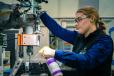
Ready to start a hands-on career? ANSTO’s Apprenticeship Program gives you the chance to earn while you learn, build real trade skills and contribute to work that supports Australia’s leading nuclear science and technology organisation.
Creative ideas are the spark for great innovations: this week students from across Australia got to share their ideas through ANSTO’s Big Ideas Forum.

Radiocarbon analyses on corals from two sites in Australian waters of the southwest (SW) Pacific has indicated significant changes in ocean circulation in the Pacific and large climate variability during the early to mid-Holocene period (8,000-5,400 years ago).
Research confirms that methylcellulose, one of the most widely used hydrogel-forming materials in biomedical research and consumer products, organises itself into a structural architecture
The physics and chemistry used at ANSTO is built upon, in significant part, by pioneering female scientists who were sidelined, expelled, or simply not credited appropriately for their achievements.
Insights into the formation of deep river canyons mountain ranges in intra-tectonic plate areas by SAAFE Scholarship recipient and collaborators.