

Showing 541 - 560 of 1221 results
ANSTO recognises scientific achievement, leadership, external collaboration and outreach at Awards event
ANSTO recognised the contribution of individuals and teams to nuclear science and technology at the 2023 ANSTO Awards Ceremony held on 25 July.
ANSTO hosts National Nuclear Security Administration (USA) visit to Lucas Heights
Application approved for operation of interim waste store
Improving the radiation tolerance of microelectronics for space
A team of Melbourne researchers and international partners from Italian Instituto Nazionale de Fisica Nucleare (INFN) and CERN, who are developing radiation-hardened semiconductor chips, used the unique state-of-art high energy ion microprobe on the SIRIUS ion accelerator at ANSTO’s Centre for Accelerator Science to test a prototype radiation-resistant computer chip
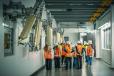
Nuclear NextGen – ANSTO's Work Experience Intensive Days for 2026
New approach to breast cancer detection using synchrotron radiation
Phase contrast tomography shows great promise in early stages of study and is expected to be tested on first patients by 2020.
Renewed agreement with Japanese research organisations to bolster cooperation in neutron science and technology
ANSTO renewed its Memorandum of Understanding (MOU) with the Japan Proton Accelerator Research Complex (J-PARC) operated by the High Energy Accelerator Research Organisation (KEK) and Japan Atomic Energy Agency (JAEA). Now broadened to include their partner Comprehensive Research Organization for Science and Society (CROSS), the signing took place early in the year and a celebratory workshop was held late July.
70 years of scientific excellence has brought significant benefits to Australia
ANSTO is a unique national science organisation that began operating under its predecessor The Australian Atomic Energy Commission (AAEC) 70 years ago.
ANSTO Hosted IAEA Pacific Islands Workshop in February 2024
In early February, ANSTO was honoured to host the International Atomic Energy Agency (IAEA) National Liaison Officers Meeting and Sub Regional Approach to the Pacific Islands (SAPI) Programme, which focused on the development and delivery of the IAEA Technical Cooperation Programme in the Pacific.
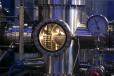
Generation IV Nuclear Reactors
Australia is as a member of the Generation IV International Forum (GIF), a cooperative international endeavour, involving the participation of 12 other nations and the European Union to work together on long term research on advanced nuclear technologies.
ANSTO features in latest round of collaborative research grants
NSW RFS Hazard Reduction Burn at ANSTO
ANSTO's material scientists honoured
Defence Materials Technology Centre honours achievements of two ANSTO collaborators.
Window into the cell
Access to a ‘window into the cell’ with University of Wollongong cryogenic electron microscope at ANSTO.
Distinguished lecture: Kimberley rock art
Multi-faceted approach to dating Australian Indigenous rock art from Kimberley region
Superconductivity ARC Linkage Grant Success
Nanostructure engineered low activation superconductors for fusion energy research.
About the ANSTO Hackathon
ANSTO star to shine bright on international stage
ANSTO’s Siobhan Tobin has been awarded the 2019 Rhodes Scholarship for Victoria which is one of the most prestigious scholarship programmes internationally.