An initiative for National Science Week 2024, the Shorebirds Competition addressed the 2024 National Science Week theme of "Species Survival" and provided unique cross-curricula learning for Australian primary school students in Years 3-6.

Showing 541 - 560 of 1508 results
Imaging at ANSTO supported Curtin University-led research that discovered the oldest 3D heart in a 380-million-year-old fossilised fish
Researchers have discovered a 380-million-year-old heart – the oldest ever found – alongside a separate fossilised stomach, intestine and liver in an ancient jawed fish, shedding new light on the evolution of our own bodies.
Research collaborator earns distinguished scholarship for work on ultra-low friction materials
Zachary Di Pietro, a PhD candidate at the University of Newcastle and AINSE Postgraduate Research Award recipient, has received the 2025 Ezio Rizzardo Polymer Scholarship from the Australian Academy of Technological Sciences & Engineering for his innovative work on synthesising and characterising polymer brushes for ultra-low friction surface applications.
ANSTO inspires young women into STEM careers
To celebrate International Women’s Day, ANSTO opened its doors to more than 50 female STEM students who heard from two accomplished ANSTO’s female scientists and STEM champions.
Synchrotron light to shine brighter over next decade
US patent awarded for unique Australian mining technology
Lithium Australia, a company that has a close association with ANSTO’s business unit Minerals, has been awarded a US patent for its unique lithium mining technology SiLeach®.
Leadership changes at ANSTO
This afternoon, the Chair of ANSTO, Dr Annabelle Bennett, wrote to all staff to let them know that CEO Dr Adi Paterson has decided to resign. She said the Board is deeply appreciative of the contributions Adi has made, including to the health, research and academic outputs of ANSTO during his tenure. Mr Shaun Jenkinson will continue as Acting CEO, while the Board undertakes a global search for a permanent CEO.

Lead, Food Materials Science; Instrument Scientist, QUOKKA (Small-Angle Neutron Scattering); Honorary Professor, CNFS, The University of Queensland
Role at ANSTO
Using the power of computing to analyse the structure of materials in extreme environments
Funding awarded to highlight leadership opportunities for women in STEM fields
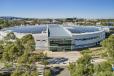
The 2025 ANSTO Australian Synchrotron Stephen Wilkins Medal
ANSTO is seeking nominations for the ANSTO Australian Synchrotron Stephen Wilkins Thesis Medal.
The 2026 ANSTO Australian Synchrotron Stephen Wilkins Medal
ANSTO is seeking nominations for the ANSTO Australian Synchrotron Stephen Wilkins Thesis Medal.
Advanced refrigeration technology on the horizon
Atomic mechanism produces colossal cooling effect in new class of materials .

Training and Education Coordinator
Rochelle is a skilled professional with a Bachelor of Medical Science and is an accredited health physics surveyor.
Synchrotron scientist selected for ATSE Emerging Leaders network
Dr Emily Finch, Microscopy Group Manager at the Australian Synchrotron, has been selected among fourteen up-and-coming leaders of Australian science to participate in Australian Academy of Technological Sciences and Engineering (ATSE) Emerging Leaders Network 2026 which supports high-potential rising professionals in STEM.
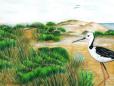
Shorebirds 2024: Flight for Survival
Australian-first detector to accelerate cancer research
Multi-million dollar Australian Cancer Research Foundation (ACRF) Detector launched at the Australian Synchrotron,
Part 1: When solar radiation grounds our planes....
Radiation testing of electronic components at ANTO could benefit the aviation industry, regulators and most importantly, passengers as solar radiation events increase.

Isotope Ecologist
Role at ANSTO