Search hero banner

Search results

Showing 61 - 80 of 156 results

business-services-irradiation-gamma

Gamma irradiation

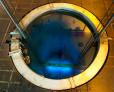
ANSTO operates a range of cobalt-60 gamma irradiators, providing the Australian community with a range of irradiation services for medical, health, industry, agriculture and research purposes.

Picture of detector

Radiation Monitoring

ANSTO continually monitors environmental gamma radiation from a station located in Engadine NSW. ANSTO uses environmental radiation data to evaluate atmospheric dispersion from its site. This radiation is almost completely natural background radiation.

Cryogenic Permanent Magnet Undulator (CPMU) source for the BRIGHT Nanoprobe beamline

Nanoprobe beamline (NANO) - under construction

The BRIGHT Nanoprobe beamline provides a unique facility capable of spectroscopic and full-field imaging. NANO will undertake high-resolution elemental mapping and ptychographic coherent diffraction imaging. Elemental mapping and XANES studies (after DCM upgrade) will be possible at sub-100 nm resolution, with structural features able to be studied down to 15 nm using ptychography.

Infrared microspectroscopy

Infrared microspectroscopy

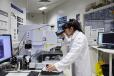
The Infrared Microspectroscopy beamline combines the high brilliance and collimation of the synchrotron beam through a Bruker V80v Fourier Transform Infrared (FTIR) spectrometer and into a Hyperion 3000 IR microscope to reach high signal-to-noise ratios at diffraction limited spatial resolutions between 3-8 μm.

Studying Western Australian caves to help us understand climate change

On average, there is now 17 per cent less rainfall across Western Australia’s south-western region than was recorded prior to 1970. This rainfall reduction has economic, social and environmental implications for the region, in particular for the growing capital of Perth, as well as water-dependent industries in the state.

Astronaut floating cells

Radiation biology

In space, without the protection of the magnetosphere, the type and dose of radiation is considerably different to what is naturally experienced on earth.

High Performance Macromolecular Crystallography Beamline (MX3)

High Performance Macromolecular Crystallography Beamline (MX3)

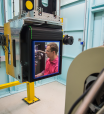
The High Performance Macromolecular Crystallography beamline will enable the study of very small (sub-5 micrometre) or weakly diffracting crystals, providing a state-of-the-art high-throughput facility for researchers. MX3 will be able to study the structures of large proteins and protein complexes for virology, drug design and industrial applications via goniometer mounted crystals, in-tray screening, or via serial crystallography methods.

New partnership

Australia and Sri Lanks signs new partnership to fight chronic kidney disease.

Novel idea of recycling CO2 in mining earns scientist win in Falling Walls Lab

Dr Jessica Hamilton, a beamline scientist at the Australian Synchrotron, has won the Falling Walls Lab competition hosted by the Australian Academy of Science for her 3 minute presentation on a novel approach to using mining waste for carbon dioxide capture and a source of carbonate minerals. The event is held to deliver solutions to some of the most promising challenges of our time.

Melbourne - Access

Melbourne Access Proposals

ANSTO’s user office in Melbourne offers access to the Australian Synchrotron, a world-class research facility with over 4,000 user visits per year. ANSTO seeks collaboration and partnerships with research organisations, scientific users and commercial users.

ANSTO welcomes $13.9M critical minerals funding

Rare earth elements will be a key area of focus for the Australian Nuclear Science and Technology Organisation’s Minerals unit as it welcomes a $13.9 million funding allocation under the Australian Critical Minerals Research and Development Hub

Pagination