Snaphot of molecular mechanism at work in lethal virus
X-ray crystallography at the Australian Synchrotron contributed to major research findings.


Showing 61 - 80 of 153 results
X-ray crystallography at the Australian Synchrotron contributed to major research findings.
Dharawal Mural tells an ancient story. Aboriginal and Torres Strait Islander viewers are advised that webpage contains images of people who have died.
A special inaugural event held by ANSTO at its Australian Synchrotron for more than 30 funding organisations has showcased the first of the $100 million BRIGHT Program’s brand new, state-of-the-art beamlines.
ANSTO has secured a $1.62 million Medical Research Future Fund (MRFF) grant under the Australian Brain Cancer Mission’s 2024 Brain Cancer Discovery and Translation program
A large collaboration of Australian and New Zealand researchers has established that a thin film technology can be used to monitor stormwater effectively and provides a way to translate the presence of metal contaminants into potential risks to aquatic ecosystems.
Innovative medical device Rhenium-SCT® therapy for non-melanoma skin cancer is now available in Australia

Dr Carol Azzam Mackay is the Design and Innovation Manager at nandin, ANSTO’s Innovation Centre.
ANSTO is a unique national science organisation that began operating under its predecessor The Australian Atomic Energy Commission (AAEC) 70 years ago.
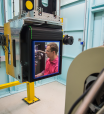
The High Performance Macromolecular Crystallography beamline will enable the study of very small (sub-5 micrometre) or weakly diffracting crystals, providing a state-of-the-art high-throughput facility for researchers. MX3 will be able to study the structures of large proteins and protein complexes for virology, drug design and industrial applications via goniometer mounted crystals, in-tray screening, or via serial crystallography methods.
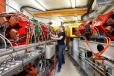
The Accelerator Science group purse a broad research program with the aims of improving the performance and reliability of our accelerators, increasing their research capabilities and developing the next generation of accelerator technology.
The Australian led regional cancer care project in medical physics held its first regional training course in Malaysia to progress Rays of Hope.
ANSTO is participating in a new Australian Research Council (ARC) Centre of Excellence for Indigenous and Environmental Histories and Futures (CIEHF) to be headquartered at James Cook University (JCU) that aims to bring Indigenous and environmental histories to the forefront of land and sea management.
ANSTO’s Australian Synchrotron has been working on an initiative that could substantially improve radiotherapy treatment for cancer patients.

The new facility will be built around a product line of ANSTO’s design – a new Technetium-99m generator – that will enable greater process automation than is possible with existing technology, leading to improvements in efficiency, quality and importantly the highest levels of production safety.
Consortium will map the 86 billion nerve cells, 100 trillion connections and neurotransmitters in the human brain.