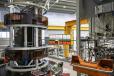
Helium 3 Polariser
This state-of-the-art metastable-exchange optical-pumping helium-3 polarising system enables polarisation-analysis experiments on five of our existing instruments.


Showing 61 - 80 of 169 results
This state-of-the-art metastable-exchange optical-pumping helium-3 polarising system enables polarisation-analysis experiments on five of our existing instruments.
ANSTO’s own meteorite hunter, who is also a planetary scientist and instrument scientist Dr Helen Brand took part in an expedition led by Professor Andy Tomkins of Monash University that has found the largest meteorite strewn field in Australia since the famous Murchison meteorite event in 1969.
Useful in some mineral processes but a major problem in others, jarosite may be the key to unlocking the geological history and environmental context of water on Mars.
The IAEA is providing $1.3m over four years to implement a new, Australian-led patient-care project for the Asia and Pacific region
An ANSTO radiochemist has been awarded a scholarship to carry out research at the world-renowned Sloan Kettering Cancer Center in New York.
Role at ANSTO
The Titan Krios cryo-electron microscope reveals the inner workings of life at the cellular level.
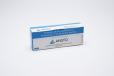
Dr Anne Hellstedt has been appointed Director of ANSTO’s Innovation Precinct.
Following a decade of imaging to support research and clinical trials at ANSTO and the University of Sydney’s Brain and Mind Centre at Camperdown, two PET scanners have been transferred to the University of Wollongong.
ANSTO has secured a $1.62 million Medical Research Future Fund (MRFF) grant under the Australian Brain Cancer Mission’s 2024 Brain Cancer Discovery and Translation program
The Graduate Institute is part of ANSTO’s Innovation Precinct and links all graduates together to create a network of Australia’s brightest young minds focused on the future.
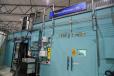
Publications and resources from the Powder Diffraction beamline.
The Australian Academy of Technology and Engineering (ATSE) has elected Professor Andrew Peele, Director of ANSTO’s Australian Synchrotron, to become a Fellow of the prestigious organisation.
Powder diffraction and X-ray fluorescence microscopy support investigation of pigments in rock art.