Agriculture study
Radiocarbon study provides insight into soil carbon dynamics and effects of agriculture.


Showing 61 - 80 of 116 results
Radiocarbon study provides insight into soil carbon dynamics and effects of agriculture.

As blood breaks down in the skin tissue, the colour of a bruise changes with time. As such, it may be used to find out information about the age of the bruise and hence a timeframe of when the incident that caused the mark took place.
Neutron scattering instruments used by Japanese researchers.

Hot Isostatic Pressing supports advanced manufacturing by increasing a material's density and reducing porosity. This capability complements ANSTO’s extensive suite of instruments and techniques for characterising materials and final products.
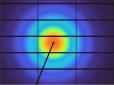
The Biological Small Angle X-ray Scattering beamline will be optimised for measuring small angle scattering of surfactants, nanoparticles, polymers, lipids, proteins and other biological macromolecules in solution. BioSAXS combines combine a state-of-the-art high-flux small angle scattering beamline with specialised in-line protein purification and preparation techniques for high-throughput protein analysis.
Outstanding individuals and teams have been recognised for their outstanding work, innovation, excellence in the 2025 ANSTO Awards.
Project Bright, the construction of eight new beamlines at ANSTO’s Australian Synchrotron has reached a milestone by achieving ‘First Light’ for the new micro-computed tomography (MCT) beamline in late NovembeR.
A new source added to ANSTO’s cosmogenic toolkit to study past climate and landscape change

Dr Luiz Bortolan Neto, a structural materials engineer at ANSTO has received an Industry Partnership award for his significant contribution to defence science at the DMTC annual conference in Canberra, last week.
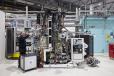
Soft x-rays are generally understood to be x-rays in the energy range 100-3,000 eV. They have insufficient energy to penetrate the beryllium window of a hard x-ray beamline but have energies higher than that of extreme ultraviolet light.

The Australian Synchrotron is a source of powerful X-rays and infrared radiation that can be used for a wide range of scientific and technical purposes. Synchrotron X-rays are millions of times brighter than those produced by conventional X-ray machines in laboratories and hospitals.
Meeting of minds about potential next-generation cancer treatment for Australians

The User Advisory Committee (UAC) are pleased to present this year's invited speakers.
Exploring the interaction of polystyrene nanoplastics and blood plasma proteins.

Radioisotopes are widely used in medicine, industry, and scientific research. New applications for radioisotopes are constantly being developed.

An instrument used to study any materials with structure of the length scale 1-100nm.