Big Ideas Winners - 2020
Winners of the Big Ideas Competition 2021


Showing 61 - 80 of 253 results
Winners of the Big Ideas Competition 2021

ANSTO User Meeting 2021 - Speakers

ANSTO seeks candidates who are passionate about making a contribution to Australian society through supporting nuclear science and technology.

CORIS360® GNI images gamma-ray and thermal neutron radiation sources, delivering an unprecedented ability to detect, localise, and identify nuclear materials.


Think Science! 2025 Summary and results
The SAXS / WAXS beamline at the Australian Synchrotron is a highly flexible x-ray scattering facility with purpose-built optics and a very flexible endstation and SAXS camera enable multiple types of experiments.

This program explores the mechanism and outcome of the interaction of radiation on biological systems in order to improve our understanding of the impact of radiation on the brain, optimise radiotherapy and develop mitigation strategies for space travellers.
Within the bulk structure of such glasses, boron is known to be a key actor, as it exhibits intriguing and composition-dependent changes in coordination state that often drive properties.


Australia’s Open Pool Australian Lightwater (OPAL) reactor is a state-of-the-art 20 megawatt multi-purpose reactor that uses low enriched uranium (LEU) fuel to achieve a range of activities to benefit human health, enable research to support a more sustainable environment and provide innovative solutions for industry.
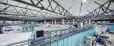
The Australian Synchrotron is a source of powerful X-rays and infrared radiation that can be used for a wide range of scientific and technical purposes. Synchrotron X-rays are millions of times brighter than those produced by conventional X-ray machines in laboratories and hospitals.
Doping with transition metals produced stability in bismuth oxide.
Doping with transition metals produced stability in bismuth oxide.

Read about an ANSTO scientist and their work to prepare for a school project or interview.
3D models of multilayered structures on engineering scale from nanoscale damage profiles.