The future is BRIGHT
Melbourne


Showing 61 - 80 of 153 results
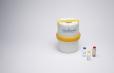
Supporting healthcare professionals in Australia with easy-to-access resources related to ANSTO’s Gentech® Generator.

Highlights of the Energy Materials Project.
The Australian led regional cancer care project in medical physics held its first regional training course in Malaysia to progress Rays of Hope.

You are invited to submit to the various awards from ANSTO, User Advisory Committee (UAC) and Australian Neutron Beam User Group (ANBUG).

By submitting a proposal for Merit Access to ANSTO’s Biosciences, Centre for Accelerator Science, Isotope Tracing, Nuclear Stewardship or the Vivarium capabilities, you are agreeing to the following Terms and Conditions. These Terms and Conditions apply to external merit researchers, scientific collaborators and partners unless there is a specific agreement in place between ANSTO and the home institution of the Principal Investigator.

An unusual and very exciting form of carbon - that can be created by drawing on paper - looks to hold the key to real-time, high throughput DNA sequencing, a technique that would revolutionise medical research and testing.
An international team of academic researchers led by Curtin University have provided a description of a new species of pterosaur, a flying reptile.
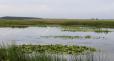
Currently ANSTO partners with the Australian Bureau of Meteorology to operate the Australian GNIP stations with samples analysed at ANSTO’s Environmental Isotope Laboratories in Sydney.
ANSTO will make an application to the independent nuclear regulator, ARPANSA, to vary its license for its Interim Waste Store. The original operating license was approved in 2015, enabling the facility to hold what is called a TN-81 cask of intermediate-level radioactive waste that was safely repatriated from France in 2015.
International neutron scattering award for retired head of former Bragg Institute, Prof Robert Robinson
ANSTO has secured a $1.62 million Medical Research Future Fund (MRFF) grant under the Australian Brain Cancer Mission’s 2024 Brain Cancer Discovery and Translation program, administered by the Department of Health and Aged Care.

The User Advisory Committee (UAC) are pleased to present this year's invited speakers.

You are invited to submit to the various awards from ANSTO and the User Meeting 2025 organising committee.