

Showing 61 - 80 of 1113 results
ANSTO contributes to new understanding of how COVID infects humans
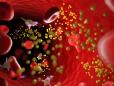
ANSTO’s National Deuteration Facility has provided deuterated cholesterol for international research to gain a better understanding of how the Spike protein of the COVID virus, SARS-Co-V-2, infects human cells through a membrane fusion mechanism.
Deuterated Plasmalogens: A New Class of Labelled Lipids from the NDF
New low level waste storage technology enhances safety, access and efficiency
The Waste Management Services group at ANSTO is now using a new automated storage and retrieval system (ASRS) that will enhance safety, access and efficiency.
First synchrotron light is a milestone for new instruments at ANSTO’s Australian Synchrotron
NSTO’S major project to introduce eight new beamlines at the Australian Synchrotron has reached a milestone with the delivery of ‘first light’ to the new MEX-1 beamline.
Australia charges ahead with new Lithium Technology
Scientists at ANSTO together with Lithium Australia Limited (LIT) have developed a world-first technology to extract more lithium from lithium mining waste, in a game-changer for Australian lithium industry.
New TSPO-free model to assist drug development for life threatening diseases
Unsung Aussie Net Zero Hero
Australia’s Nuclear Science and Technology Organisation (ANSTO) is well-known for facilitating incredible science and creating life-saving nuclear medicines, but for the last 40 years it’s been quietly producing a largely unsung net zero hero: Neutron Transmutation Doped (NTD) silicon.
New technique to improve global climate models
An investigation that set out to resolve some of the uncertainty in the sources and quantities of pollutants reaching Antarctica has produced a new experimental technique to identify and characterise recently terrestrially-influenced air reaching Antarctica.
ANSTO researchers support study into conversion of waste heat into potential new energy source
Nuclear techniques will be crucial tools in the development of advanced materials that sustainably convert waste heat into useful forms of energy to benefit Australia.
New global, first-of-a-kind ANSTO Synroc facility
A new nuclear medicine waste processing facility that showcases ANSTO Synroc technology is under construction.
New therapy targets aggressive form of leukaemia
New anti-cancer drugs put cancers to sleep… permanently
Biochemical and structural studies to elucidate protein interactions of the new compounds and target molecules included X-ray diffraction at the Australian Synchrotron.
Making science accessible to everyone: new initiative for the Deaf community
ANSTO was proud to support the first science-themed AuslanX event for the greater Sydney Deaf community during National Science Week.
An unambiguous message of support for carbon capture: a new ARC Centre of Excellence
The ARC Centre of Excellence (CoE) for Green Electrochemical Transformation of Carbon Dioxide, GETCO2, will support innovative approaches to carbon capture.

Per-deuterated linoleic acid-d31: Available now from the NDF
Funding backs ANSTO‑led program to develop new treatment for deadly brain cancers
ANSTO has secured a $1.62 million Medical Research Future Fund (MRFF) grant under the Australian Brain Cancer Mission’s 2024 Brain Cancer Discovery and Translation program
Unusual state of matter in new material holds promise for transformative quantum technologies
ANSTO has provided supporting experimental evidence of a highly unusual quantum state, a quantum spin liquid (QSL), in a two-dimensional material.