Radiocarbon dating and stable isotope analysis contribute to Antarctic research
Study shows for the first time that vegetation in the Windmill Islands, East Antarctica is changing rapidly in response to a drying climate.


Showing 621 - 640 of 673 results
Study shows for the first time that vegetation in the Windmill Islands, East Antarctica is changing rapidly in response to a drying climate.


Health researchers at ANSTO use world-class nuclear and isotopic techniques to undertake research and development activities to address some of the most challenging health problems.
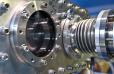
Recoil Time of Flight Spectrometry (RTOF) is used to detect a multitude of elements by separating their masses. unambiguously
An international team of academic researchers led by Curtin University have provided a description of a new species of pterosaur, a flying reptile.
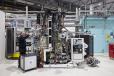
Soft x-rays are generally understood to be x-rays in the energy range 100-3,000 eV. They have insufficient energy to penetrate the beryllium window of a hard x-ray beamline but have energies higher than that of extreme ultraviolet light.
The proof of concept for the approach used in the early development of the new gamma-ray imaging system has been published,
Stable, highly conductive 2D nanosheets of boron nitride promising new material.
Radiocarbon dating of mud wasp nests was used as an indirect method of dating the Gwion Gwion style.
Using the past to illuminate the future: Brothers collaborate on important science documentary for ABC TV
Highly accurate non-invasive nuclear technique helps validate theoretical model for optimised laser material deposition in additive manufacturing.
Research on lunar meteorite and moon crater analogues coincides with Science Week.

The Think Science! event encourages students to engage with the Science Inquiry Skills process as outlined in the Australian National Curriculum.
Two ANSTO physicist explain the three-body problem as featured in science fiction series of the same name
ANSTO recently re-started the OPAL Reactor after a six-month shutdown for essential maintenance and the installation of an upgraded facility.

ANSTO researchers are undertaking the fabrication and characterising advanced fuels and investigating the key properties of nuclear waste and its long-term interaction with containment materials to improve safety for short and long-term storage.
Modelling and experimentation - a powerful combination in probing mechanical properties of ion irradiated materials through nanoindentation.
Five exceptional female science communicators are part of a larger team who use skills in education and engagement to promote an interest in science amongst the public and students.
Researchers from ANSTO and NASA’s Jet Propulsion Laboratory have uncovered the likely mineral composition of Saturn’s largest moon, Titan, revealing a world of exotic organic crystals unlike any found on Earth.