Celebrating ANSTO and 70 years of Australia’s home-grown nuclear expertise
In 2023 we’re celebrating the 70th Anniversary since Australia began developing our nation’s Australia’s nuclear capabilities.


Showing 621 - 640 of 792 results
In 2023 we’re celebrating the 70th Anniversary since Australia began developing our nation’s Australia’s nuclear capabilities.
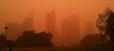
This resource provides a systematic, step by step scaffold of a scientific investigation using secondary data of atmospheric measurements made on the grounds of Liverpool Girls' High School from March 2019 to February 2020.
Students will:
- propose an hypothesis after researching relevant background information
- process and analyse data and information
- create a graph and interpret results
- communicate the process and findings of their investigation in the form of a scientific report
- increase their understanding of the atmosphere and the factors that influence it
Charcoal particles from recent bushfires in NSW were carried 50 kilometres by the wind, which has significance for fire history reconstruction.
A paper led by researchers at the University of New South Wales (UNSW) published in the PNAS last year has confirmed the theory that echidnas and platypuses descended from an aquatic ancestor with fossil evidence.
Investigators from UNSW and ANSTO have provided insights into the dynamic interactions of atoms in a promising material for sodium-ion batteries.
3D models of multilayered structures on engineering scale from nanoscale damage profiles.
A new continuous record of temperature dating back 12,000 years provides an import resource in understanding current and future climate changes,
ITRAX has now analysed more than a kilometre of cores since it became operational in 2012.
ANSTO’s OPAL multi-purpose research reactor at Lucas Heights has officially returned to power and recommenced operations, following a months-long planned shutdown to carry out essential maintenance and upgrades.
ANSTO's Chief Nuclear Officer shares insights on the safe management of Australia's nuclear waste.
A team of scientists led by Monash University and the University of Melbourne in association with the Peter Doherty Institute for Infection and Immunity have made progress in clarifying the molecular interactions that underpin how our adaptive immune cells recognise SARS CoV-2, which causes COVID-19.
Two early career nuclear scientists who received international scholarships have spent time in the Nuclear Fuel Cycle group at ANSTO are making progress on their work to improve nuclear fuel.
A new source added to ANSTO’s cosmogenic toolkit to study past climate and landscape change
The celebration of the UN’s International Women’s Day 2023 has a theme that highlights the power of innovative IT to combat discrimination and the marginalisation of women globally.
A large collaboration of Australian and New Zealand researchers has established that a thin film technology can be used to monitor stormwater effectively and provides a way to translate the presence of metal contaminants into potential risks to aquatic ecosystems.

Recoil Time of Flight Spectrometry (RTOF) is used to detect a multitude of elements by separating their masses. unambiguously
Research reports for the first time how solid methane and nitrogen expand in response to temperature changes and resolves an historic ambiguity relating to the structure of nitrogen.