ANSTO strengthens its collaboration with IAEA to support environmental protection
Stronger research link with IAEA with the establishment of Collaborating Centre at ANSTO to support environment and cultural heritage activities


Showing 621 - 640 of 2069 results
Stronger research link with IAEA with the establishment of Collaborating Centre at ANSTO to support environment and cultural heritage activities
ANSTO has produced a comprehensive report for the NSW Department of Planning and Environment that represents a significant scientific investigation of the connections, pathways and processes of water loss from the Thirlmere Lakes system.
indigenous Cultural Intellectual Property is a broader way of talking about First Peoples’ rights to their cultural heritage, traditional knowledge and cultural expressions.
To celebrate International Women’s Day, ANSTO opened its doors to more than 50 female STEM students who heard from two accomplished ANSTO’s female scientists and STEM champions.

In space, without the protection of the magnetosphere, the type and dose of radiation is considerably different to what is naturally experienced on earth. However, it is the secondary particles of lower energies created when galactic and cosmic radiation interacts with shielding that is of concern for astronauts.


Highlights on the Water Isotope Network project.
Researchers from UNSW have found an extraordinary material that does expand or contract over an extremely wide temperature range and may be one of the most stable materials known.

The design and implementation of alternative energy sources is one of the greatest scientific and social challenges of our time.

The BRIGHT Project will expand the beamline infrastructure of the Australian Synchrotron to increase both its capacity and capabilities.

ANSTO has a variety of games and apps to educate students on how radiation works, nuclear medicine, the periodic table, and atom building.
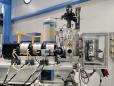
The high-energy heavy-ion microprobe is used for the characterisation or modification of material properties at depths from approximately 1 micrometre to maximum depths of up to 500 micrometres from the material surface.

Planetary science is an emerging research theme in Australia, and research at ANSTO is embedded in the heart of this.

Samples and techniques on the Far Infrared beamline at the Australian Synchrotron.
New class of conducting materials found for potential use in next generation fuel cells and other applications.
PhD candidate Vienna Wong is using her FutureNow Scholarship to research ultra-high temperature ceramics, which are emerging materials for extreme environments.