

Showing 641 - 660 of 792 results

Highlights - Cultural Heritage
Over the last decades, neutron, photon, and ion beams have been established as an innovative and attractive investigative approach to characterise cultural-heritage materials.
Nuclear medicine production at ANSTO
Ongoing media statements relating to nuclear medicine production.
Some surprises about the degradation of microplastics in our oceans
The process by which plastic degrades in the ocean facilitates its entry into the natural carbon cycle efficiently as carbon dioxide.
An investigation of residual stresses in insulated rail joints
ANSTO researchers support study into conversion of waste heat into potential new energy source
Nuclear techniques will be crucial tools in the development of advanced materials that sustainably convert waste heat into useful forms of energy to benefit Australia.
Studying Western Australian caves to help us understand climate change
On average, there is now 17 per cent less rainfall across Western Australia’s south-western region than was recorded prior to 1970. This rainfall reduction has economic, social and environmental implications for the region, in particular for the growing capital of Perth, as well as water-dependent industries in the state.
Experimental evidence of quantum spin liquid
Researchers use Kitaev theoretical model to explain unusual phenomenon in two-dimensional material.
Synchrotron light reveals secrets of mystery McCubbin
Analysis of fingermarks with synchrotron techniques provide new insights
A new study by researchers from Curtin University using the infrared (IR) and X-ray fluorescence microscopy (XFM) beamlines at the Australian Synchrotron has provided a better understanding of the chemical and elemental composition of latent fingermarks.

Australian access to overseas synchrotrons
The International Synchrotron Access Program (ISAP) is administered by the Australian Synchrotron and is designed to assist Australian-based synchrotron users to access overseas synchrotron related facilities.
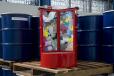
Managing Radioactive Waste
ANSTO has safely managed its radioactive waste for over 60 years. Waste is managed in accordance with national and international standards.
Nuclear techniques confirm unique biology of human eye lens
Getting the facts on milk fats
Carbon ion therapy
The Japanese experience with leading-edge radiation treatment for cancer shows tremndous success
Independent report into safety of Building 23 at ANSTO
The final report on the safety of Building 23 by the independent expert review team has been completed.
ANSTO reports
Report to the independent nuclear regulator, ARPANSA, and the IAEA
ANSTO plastic trawling from Hobart to Sydney
Space research enabled with new capability
New high energy ion microprobe beamline supports space research on the effects of radiation on astronauts.
New approach to breast cancer detection using synchrotron radiation
Phase contrast tomography shows great promise in early stages of study and is expected to be tested on first patients by 2020.