Radiocarbon dating and stable isotope analysis contribute to Antarctic research
Study shows for the first time that vegetation in the Windmill Islands, East Antarctica is changing rapidly in response to a drying climate.


Showing 641 - 660 of 1156 results
Study shows for the first time that vegetation in the Windmill Islands, East Antarctica is changing rapidly in response to a drying climate.
The Graduate Institute is part of ANSTO’s Innovation Precinct and links all graduates together to create a network of Australia’s brightest young minds focused on the future.
ANSTO is part of a contingent showcasing Australian science at the Australian Pavilion at the World Expo Osaka in October.
A team of ANSTO health researchers, staff at the Centre for Accelerator Science and Dr Melanie Ferlazzo, a postdoc from the French National Institute of Health and Medical Research (INSERM), and scientists from the French Space Agency (CNES), are collaborating on investigations to determine the impact of secondary particles on human cells using the new microprobe beamline at ANSTO’s Centre for Accelerator Science.
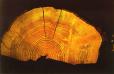
Radiocarbon dating is a well-known method for determining the age of materials up to the age of approximately 50,000 years.
Stable, highly conductive 2D nanosheets of boron nitride promising new material.
A new study by researchers from Curtin University using the infrared (IR) and X-ray fluorescence microscopy (XFM) beamlines at the Australian Synchrotron has provided a better understanding of the chemical and elemental composition of latent fingermarks.
Strategic partnership with the University of Sydney expanded to continue a long history of research collaboration.
New facility will greatly enhance Australia’s capability in stress engineering for industry
Meeting of minds about potential next-generation cancer treatment for Australians
An article in Nature Geosciences has highlighted the power of synchrotron techniques to reveal the inner workings of volcanic systems that could potentially help with predictions of eruptions.
ANSTO has played a formative role and continues to make important contributions using nuclear and isotopic techniques to understand past climates and patterns of change, maintain water resource sustainability and provide insights into the impact of contaminate in the environment.
Historic memorandums of understanding on the peaceful use of nuclear with Thailand and Canada.
Peter Kabokov will continue work that will contribute to defence industry
Soft X-ray experiments used to characterise new thin film topological Dirac Semimetal.