Sharing expertise with regional neighbours
Participants undertook IAEA training hosted by Macquarie University and ANSTO on use of radionuclides for soil and water investigations.


Showing 661 - 680 of 973 results
Participants undertook IAEA training hosted by Macquarie University and ANSTO on use of radionuclides for soil and water investigations.
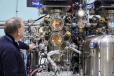
Technical information on the Soft X-ray spectroscopy beamline at the Australian Synchrotron.
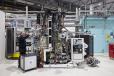
An analysis program for viewing and analysing near-edge X-ray absorption fine-structure (NEXAFS) spectra.
Radiocarbon study provides insight into soil carbon dynamics and effects of agriculture.
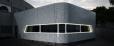
The Advanced Diffraction and Scattering beamlines (ADS-1 and ADS-2) are two independently operating, experimentally flexible beamlines that will use high-energy X-ray diffraction and imaging to characterise the structures of new materials and minerals.
ANSTO is part of collaboration conducting experiments to redefine the kilogram linking it to a fundamental constant of nature.
Imaging protocol assesses molecular mechanism of work in the treatment of deadly childhood cancer neuroblastoma.
The need for a smaller, more transportable version of ANSTO’s 1500-litre atmospheric radon-222 monitor, and with a calibration traceable to the International System of Units, prompted the team to develop a 200-litre radon monitor that would meet those needs.
Exploring the interaction of polystyrene nanoplastics and blood plasma proteins.
A major study has identified urbanisation and climate change as future threats to drinking water quality.
ANSTO has hosted for the third time the International Atomic Energy Agency’s (IAEA) Practical Introduction to Nuclear Forensics Regional Training Course.
An ANSTO radiochemist has been awarded a scholarship to carry out research at the world-renowned Sloan Kettering Cancer Center in New York.

Ongoing media statements relating to nuclear medicine production.
Contributing to research that strengthens the defence of Australia
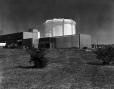
In April 15, 1953, Australia entered the nuclear science arena, when the Atomic Energy Act came into effect. The Australian Atomic Energy Commission (AAEC) followed and in 1987 the AAEC evolved into the Australian Nuclear Science and Technology Organisation (ANSTO) as it’s known today.
Our research group carries out fundamental research uniquely applied to industrial problems in the areas of uranium, rare earth and lithium processing.