

Showing 661 - 680 of 703 results
Air pollution sampler installation in Papua New Guinea
Landmark achievement opens pathway for treatment of drug-resistant tuberculosis
ANSTO has contributed to a recent publication in Nature Communications Biology that represents a landmark achievement in structural biology, an understanding of protein regulation mechanisms in Mycobacterium tuberculosis (Mtb), a global health threat.

Lead, Food Materials Science; Instrument Scientist, QUOKKA (Small-Angle Neutron Scattering); Honorary Professor, CNFS, The University of Queensland
Role at ANSTO
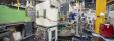
Kowari - Strain Scanner
Kowari, a residual stress diffractometer, can be used for ‘strain scanning’ of large engineering components as large as 1000 kilograms.
Cosmogenic nuclides help explain stone formation
China’s vertical sandstone pillars studied using nuclear techniques
Research investigates low activation and low cost superconducting material for magnetic coils in next generation fusion reactors
Using nuclear techniques to track micronutrients applied to wheat crops
Researchers from Murdoch University and associated collaborators are using ANSTO’s unique nuclear capabilities to gain detailed information about how wheat crops take in administered micronutrients to maximise their efficient use.

Instrument Scientist
Role at ANSTO
Million-year-old ice core recaptures climate history
Retrieving an Antarctic ice core more than a million years old presents challenges and opportunities.
Nuclear techniques confirm unique biology of human eye lens
Revealing the 'hidden half' of grain using imaging at ANSTO's Australian Synchrotron to benefit Australian agriculture
Professor of Soil Science at The University of Queensland, Peter Kopittke and partner investigator Prof Enzo Lombi of the University of SA are very optimistic about the use of a new synchrotron-based imaging technique that captures in 3D the complex interaction of soil and root.
ANSTO joins international counterparts in peaceful nuclear monitoring
The Australian Nuclear Science and Technology Organisation (ANSTO) has joined a team, lead by the US Department of Energy’s Pacific Northwest National Laboratory (PNNL), to install a high resolution monitoring system at ANSTO’s medical isotope production facility in Lucas Heights, Australia.

The evolution of molten salt reactors
Molten Salt Reactors (MSRs) are nuclear reactors that use a fluid fuel in the form of very hot fluoride or chloride salt rather than the solid fuel used in most reactors. Since the fuel salt is liquid, it can be both the fuel to produce heat and the coolant to transport the heat to a power plant.
ITRAX scanning on cores from Macquarie Island
Research reveals that strong westerly winds weaken the Southern Ocean’s ability to store carbon and thereby contribute to faster accumulation of carbon dioxide in the atmosphere
Instrument Scientist
Role at ANSTO
Nobel Prizes recognise insights at molecular and atomic scale
The Nobel Prizes for Physics, Chemistry and Medicine have been announced.

Accelerator Scientist - Radiobiologist
Role at ANSTO
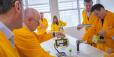
Designed for those working predominantly with unsealed radioactive sources, typically in a research, radiopharmaceutical or hospital environment. ANSTO is a recognised leader in radiation safety training, delivering industry and regulator-approved courses including S8, S10, S12 & S36.
Sydney
Analysis of fingermarks with synchrotron techniques provide new insights
A new study by researchers from Curtin University using the infrared (IR) and X-ray fluorescence microscopy (XFM) beamlines at the Australian Synchrotron has provided a better understanding of the chemical and elemental composition of latent fingermarks.