The best behind the neutron beam: Awards announced
Four annual awards in neutron scattering were announced at Australian Neutron Beam Users Group (ANBUG) and AINSE Neutron Scattering Symposium (AANSS) to individuals with strong links to ANSTO


Showing 681 - 700 of 1319 results
Four annual awards in neutron scattering were announced at Australian Neutron Beam Users Group (ANBUG) and AINSE Neutron Scattering Symposium (AANSS) to individuals with strong links to ANSTO
On average, there is now 17 per cent less rainfall across Western Australia’s south-western region than was recorded prior to 1970. This rainfall reduction has economic, social and environmental implications for the region, in particular for the growing capital of Perth, as well as water-dependent industries in the state.
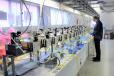
ANSTO Analytical Facility conducts a range of analyses required to support our commercial projects, and can analyse everything from simple samples to complex matrices not typically dealt with by standard commercial laboratories.
ANSTO is seeking nominations for the ANSTO Australian Synchrotron Stephen Wilkins Thesis Medal.

Three new federal grants were announced to support manufacturing and nuclear technologies.
The Titan Krios cryo-electron microscope reveals the inner workings of life at the cellular level.

Creative ideas are the spark for great innovations: this week students from across Australia got to share their ideas through ANSTO’s Big Ideas Forum.
ANSTO has made two public submissions to parliamentary inquiries with another to be submitted in February 2020 on matters relating to nuclear technologies, their peaceful applications, and the nuclear fuel cycle.

Particle induced X-ray emission can be used for quantitative analysis in archaeology, geology, biology, materials science and environmental pollution.
A sparrow with 257 parts weighing more than 29 tonnes arrives safely at ANSTO
Two startups supported by the nandin Innovation Centre at ANSTO have hit the ground running in 2021 securing major opportunities from state governments to see their businesses thrive.
With the screening of the popular HBO series about Chernobyl, we asked our Nuclear Analysis team for their insights on key differences between the reactor in the TV series, a Generation II RBMK power reactor and ANSTO’s state of the art research reactor OPAL.
Minerals Principal Consultant, Dr Karin Soldenhoff, was honoured with the 2024 NSW Women in Mining -Technological Innovation award last week for her work as technical lead on the Australia Strategic Metals (ASM) Dubbo Project, and development of a new solvent extraction technology to separate rare earth and other critical elements.
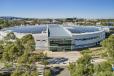
More than 3,200 solar panels have been installed across the rooftops of the Australian Nuclear Science and Technology Organisation’s (ANSTO) Australian Synchrotron in Clayton, offsetting enough power to light up the whole MCG for more than five years.
An international team led by scientists at City University of Hong Kong has found flexible metal-organic framework (MOF) with one-dimensional channels that acts as a “molecular trapdoor” to selectively adsorb gases, such as carbon dioxide, in response to temperature and pressure changes.