
Senior Business Manager
Stewart started at ACNS in 2007 after completing his Bachelor’s degree where he completed his honours projects with ANSTO.


Showing 741 - 760 of 803 results
Stewart started at ACNS in 2007 after completing his Bachelor’s degree where he completed his honours projects with ANSTO.
Measurement research undertaken to ensure safe, well-engineered nanoparticles
Radiocarbon analyses on corals from two sites in Australian waters of the southwest (SW) Pacific has indicated significant changes in ocean circulation in the Pacific and large climate variability during the early to mid-Holocene period (8,000-5,400 years ago).

Atmosphere scientists find link between indigenous weather knowledge and Sydney air pollution.

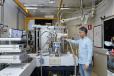
The THz/Far-IR Beamline couples the high brightness and collimation of a bend-magnet synchrotron radiation to a Bruker IFS125HR spectrometer providing high-resolution spectra (0.00096 cm-1) with signal to noise ratio superior to that of thermal sources up to 1350 cm-1 for gas-phase applications; the beamline also delivers signal to noise ratio superior to that of thermal sources up to 350 cm-1 for condensed phase samples.

A large team of international researchers have used synchrotron techniques to understand how key proteins contribute to the virulence of the rabies virus, sometimes called the “zombie virus.”
China’s vertical sandstone pillars studied using nuclear techniques

Kathleen manages the quality and document management systems, and oversees procedures for inspection, testing, and calibration of equipment and systems, to support the accelerator operations and beam lines.
Retrieving an Antarctic ice core more than a million years old presents challenges and opportunities.
Dr Andrew Smith has just finished collecting ice cores and snow samples on the summit of Law Dome in Antarctica,

The Multi-wavelength absorption black carbon instrument MABI can determine the concentration and source of black carbon pollution.

Role at ANSTO: