Showing 81 - 100 of 110 results
Aerosol Sampling Program
ANSTO plays a leading role in measuring and characterising fine particles from a range of locations around Australia and internationally.
Nuclear power technology explored
ANSTO shared expertise on next-generation reactors and nuclear power with sustainable energy experts at the Australian Academy of Science symposium in May.
Giving waste plastics a second life as high-performance materials
A new study has shown that, rather than being discarded, plastics can be transformed into valuable carbon nanomaterials that help solve both energy and environmental challenges.
Biological small angle X-ray scattering beamline (BioSAXS)
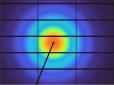
The Biological Small Angle X-ray Scattering beamline will be optimised for measuring small angle scattering of surfactants, nanoparticles, polymers, lipids, proteins and other biological macromolecules in solution. BioSAXS combines combine a state-of-the-art high-flux small angle scattering beamline with specialised in-line protein purification and preparation techniques for high-throughput protein analysis.
Training session highlighted an approach to calculate the ingested dose of radionuclides in seafood
Dr Mathew Johansen, an environmental scientist at ANSTO, presented in an online IAEA training workshop on Advanced Topics in Radiochemistry Techniques this week.
ANSTO part of new network to transform Australia into world-leading space centre
ANSTO is a partner on the National Space Qualification Network (NSQN) led by the Australian National University (ANU) that will transform Australia into a world-leading space centre by enhancing facilities to test payloads, components, and hardware prior to their use in harsh environments of space.
Champions are accelerating progress in the empowerment of women
The world’s best radon detector just got smaller
The need for a smaller, more transportable version of ANSTO’s 1500-litre atmospheric radon-222 monitor, and with a calibration traceable to the International System of Units, prompted the team to develop a 200-litre radon monitor that would meet those needs.
ANSTO welcomes $13.9M critical minerals funding
Rare earth elements will be a key area of focus for the Australian Nuclear Science and Technology Organisation’s Minerals unit as it welcomes a $13.9 million funding allocation under the Australian Critical Minerals Research and Development Hub
OPAL 2024 Shutdown
ANSTO's OPAL reactor is one of the world's most advanced and reliable research reactors today. To ensure we can continue operating OPAL safely and reliably and maximise utilisation, ANSTO must regularly carry out maintenance and upgrades.
New molecule puts scientists a step closer to understanding hydrogen storage
Australian and Taiwanese scientists have discovered a new molecule which puts the science community one step closer to solving one of the barriers to development of cleaner, greener hydrogen fuel-cells as a viable power source for cars.
Anonymised Review
ANSTO has agreed to participate in an Australian trial of a review of research infrastructure access proposals in which applicants remain anonymous to aid the removal of structural barriers to the career progression of Women in STEM.
Role at ANSTO
- Leader, Energy Materials Research Project
ANSTO scientists share thoughts on Oppenheimer film
Australia’s OPAL multi-purpose reactor prepares for new milestone
Routine transport of spent nuclear fuel
Research sheds light on mechanism by which long-term anti-anxiety drug use affects the brain
ANSTO health researchers have contributed to an international study published in Nature Neuroscience that sheds light on the mechanism by which anti-anxiety drugs act on the brain which could lead to cognitive impairment in vulnerable individuals.
Archive
Archive of ANSTO research publications, seminars and short talks.
Infrastructure - Cultural Heritage
In Australia and the Southeast Asia basin, the ANSTO facility offers a wide range of unique nuclear-beam techniques for cultural heritage research.