
ANSTO Synroc® - Radioactive Waste Treatment Technology
ANSTO Synroc technology provides a safe, secure matrix for the immobilisation and final disposal of radioactive waste.


Showing 81 - 100 of 104 results
ANSTO Synroc technology provides a safe, secure matrix for the immobilisation and final disposal of radioactive waste.
This week marks 20 years since ANSTO’s OPAL multi-purpose reactor first achieved criticality - a defining moment for Australian nuclear science and the beginning of two decades of discoveries, medical advances and industrial innovation delivered from ANSTO’s Lucas Heights campus.
Australia part of global renaissance in fusion power research symbolised by ITER experiment
Three new federal grants were announced to support manufacturing and nuclear technologies.
The Titan Krios cryo-electron microscope reveals the inner workings of life at the cellular level.
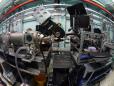
Technical information on the SAXS / WAXS beamline at the Australian Synchrotron.
ANSTO will make an application to the independent nuclear regulator, ARPANSA, to vary its license for its Interim Waste Store. The original operating license was approved in 2015, enabling the facility to hold what is called a TN-81 cask of intermediate-level radioactive waste that was safely repatriated from France in 2015.

ANSTO is proud to host the Shorebirds Competition for the fourth year. This unique environmental poster competition is free to enter and offers over $4000 in prizes (insert link to prizes button) for students and schools!

The Nobel Prizes for Physics, Chemistry and Medicine have been announced.
Research will change understanding of Australian Aboriginal rock art found in rock shelters of the Kimberley and its relationship to a changing landscape

ANSTO is proud to host the Shorebirds Competition for the fifth year. This unique environmental poster competition is free to enter and offers over $4500 in prizes for students and schools!
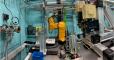
With enhanced submicron spatial resolution, speed and contrast, the Micro-Computed Tomography beamline opens a window on the micron-scale 3D structure of a wide range of samples relevant to many areas of science including life sciences, materials engineering, anthropology, palaeontology and geology. MCT will be able to undertake high-speed and high-throughput studies, as well as provide a range of phase-contrast imaging modalities.
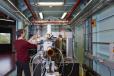
Beamtime Guide on the X-ray Fluorescence Microscopy beamline at the Australian Synchrotron.