Instrument Scientist


Showing 81 - 100 of 183 results

Think Science! 2023 Summary and Results
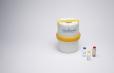
Supporting healthcare professionals in Australia with easy-to-access resources related to ANSTO’s Gentech® Generator.

The unique magnetic properties and nontrivial quantum effects were observed and measured in an advanced material with potential application for quantum computing.


ANSTO's Sydney locations are home to the Open Pool Australian Light-water (OPAL) multi-purpose reactor, the Centre for Accelerator Science (CAS), the Australian Centre for Neutron Scattering, the National Research Cyclotron and the National Deuteration Facility.

Insights into the behaviour of structural materials in a molten salt environment


ANSTO provides secondary students with a range of learning resources for those interested in science or studying for exams. For teachers, ANSTO provides learning resources and professional development, as well as in-school-term science tours and videoconferences. Workbooks are provided as required learning material to accompany a school visit to ANSTO. They can also be used on their own as a classroom resource.



ANSTO has been tracking and publishing data on fine particle pollution from key sites around Australia, and internationally, for more than 20 years.




ANSTO’s user office in Melbourne offers access to the Australian Synchrotron, a world-class research facility with over 4,000 user visits per year. ANSTO seeks collaboration and partnerships with research organisations, scientific users and commercial users.