Antarctic expedition to seek natural air cleanser in the ice sheet
ANSTO is participating in a major project to learn more about an important component of the atmosphere, the hydroxyl radical.


Showing 81 - 100 of 137 results
ANSTO is participating in a major project to learn more about an important component of the atmosphere, the hydroxyl radical.


The Advanced Diffraction and Scattering beamlines (ADS-1 and ADS-2) are two independently operating, experimentally flexible beamlines that will use high-energy X-ray diffraction and imaging to characterise the structures of new materials and minerals.
Experiments at the Synchrotron enable researchers to produce a 3D structure of a molecular scaffold with role in cancer
Melbourne researchers have used the Australian Synchrotron to produce structure of molecule known to play a critical role in the development and spread of aggressive cancer.
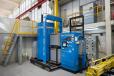
Hot Isostatic Pressing supports advanced manufacturing by increasing a material's density and reducing porosity. This capability complements ANSTO’s extensive suite of instruments and techniques for characterising materials and final products.
The role of trace elements as palaeoclimate proxies has been explored in ANSTO-led collaborative environmental research.

Ultra-flexible electronics has many potential applications within areas such as for example the military, healthcare and energy.


ANSTO provides a summary of waste production and consumables for FY2024 - FY2025

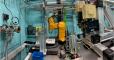
With enhanced submicron spatial resolution, speed and contrast, the Micro-Computed Tomography beamline opens a window on the micron-scale 3D structure of a wide range of samples relevant to many areas of science including life sciences, materials engineering, anthropology, palaeontology and geology. MCT will be able to undertake high-speed and high-throughput studies, as well as provide a range of phase-contrast imaging modalities.

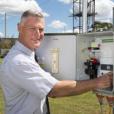


Stephen received his PhD (Physical Chemistry) from Griffith University in 1996.

ANSTO has agreed to participate in an Australian trial of a review of research infrastructure access proposals in which applicants remain anonymous to aid the removal of structural barriers to the career progression of Women in STEM.