Search hero banner

Search results

Showing 801 - 820 of 2480 results

Building new knowledge of advanced materials in extreme environments

An international research collaboration between the University of New South Wales (UNSW), the Shanghai Institute of Applied Physics (SINAP) and ANSTO has provided insights into the performance of advanced material for use in the high-temperature environment of molten salt systems.
ANSTO's Australian Synchrotron Goes Solar for a Greener Future

More than 3,200 solar panels have been installed across the rooftops of the Australian Nuclear Science and Technology Organisation’s (ANSTO) Australian Synchrotron in Clayton, offsetting enough power to light up the whole MCG for more than five years.

Instruments ANSTO

ANSTO Instruments

ANSTO's facilities in Sydney include access to neutron beam instruments, X-ray and infrared instruments, biological and chemical deuteration, accelerators, and an array of other capabilities and techniques.

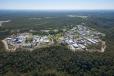
ANSTO aerial

Vision

ANSTO is one of Australia’s largest public research organisations and is widely recognised as an international player in the field of nuclear science and technology.

Secondary School Education

Secondary Education

Challenge your understanding of nuclear science and technology with fun secondary school activities, exciting competitions and unique tours of our facilities.

Dark matter lab funded

ANSTO to ensure ultra-low radiation environment in newly-funded Stawell Underground Physics Laboratory.

We used electrostatically-charged balloons to accumulate radon progeny from the air (Getty Images).

Investigating radiation in the air we breathe

Radon is a significant component of background radiation and can accumulate in poorly ventilated indoor environments. 

In this data set, we investigated the effect of electrostatically charging a balloon, which was then hung in an enclosed space, on its level of radioactivity. 

Students write a hypothesis, graph data, write a conclusion and use provided information to answer questions about radioactivity and radon, experimental design, accuracy, validity and reliability.

Feathery moa’s fossilised footprints, ancient age revealed

ANSTO scientist, Dr Klaus Wilcken of the Centre for Accelerator Science, used cosmogenic nuclide dating to determine the ages of layered sand and gravel samples, in which seven footprints of the flightless bird, the moa, were found on the South Island in New Zealand in 2019.

Pagination