
Accelerator mass spectrometry techniques
Accelerator Mass Spectrometry (AMS) is an ultra-sensitive analytical technique based on the use of an ion accelerator as a powerful mass spectrometer.


Showing 901 - 920 of 989 results
Accelerator Mass Spectrometry (AMS) is an ultra-sensitive analytical technique based on the use of an ion accelerator as a powerful mass spectrometer.
Health researchers have developed a new method for producing PET radiotracers.
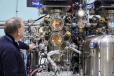
Technical information on the Soft X-ray spectroscopy beamline at the Australian Synchrotron.
A large collaboration of European investigators gained insights into how the SARS-CoV-2 spike protein (S protein) impacts with lipid metabolism in the body with implications for COVID-19 infection and mRNA vaccination.
Singapore researchers publish findings of link between proteins of archaea and eukaryotes despite being separated by more than 2 billion years of evolution.
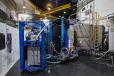
Sample environments, Data analysis, SpICE and SICS
A large team of international researchers have used synchrotron techniques to understand how key proteins contribute to the virulence of the rabies virus, sometimes called the “zombie virus.”
Three ANSTO staff members were involved in a chemical spill this morning when approx 250mL of sodium hydroxide was released from a pipe.
Researchers from La Trobe University have used the Australian Synchrotron to help identify a key mechanism in how SARS-CoV-2 damages lung tissue.
Dr Rezwanul Haque, now a senior lecturer at the University of the Sunshine Coast, received a national Young Scientist Award for his earlier research using nuclear techniques at ANSTO’s Australian Centre for Neutron Scattering to find cracks and signs of stress in riveted joints in sheet metal in car bodies.
Research demonstrates the existence of hexagonal planar geometry in a transition metal complex with great potential application across multiple disciplines.