National Science Week: Success with virtual events
Virtual activities celebrating the benefits of nuclear science and technology held for National Science Week


Showing 901 - 920 of 2173 results
Virtual activities celebrating the benefits of nuclear science and technology held for National Science Week

ANSTO leverages great science to deliver big outcomes. We partner with scientists and engineers and apply new technologies to provide real-world benefits. Our work improves human health, saves lives, builds our industries and protects the environment.
ANSTO’s Australian Synchrotron has been working on an initiative that could substantially improve radiotherapy treatment for cancer patients.
ANSTO, Australia’s knowledge centre for nuclear science and technology, connects STEM graduates with industry to work on real-world challenges through its FutureNow Scholarships for 2022.
International interest is building in Australia’s new multi-million-dollar radioactive waste processing facility at the Sydney campus of the Australian Nuclear Science and Technology Organisation (ANSTO).
Phase contrast tomography shows great promise in early stages of study and is expected to be tested on first patients by 2020.
With world-class experts in groundwater and major contributions in this area over two decades, ANSTO completed a major project report on Improving groundwater sustainability and renewability using isotope hydrochemistry in NSW for the Department of Planning and Environment (NSW) and National Water Grid earlier in the year.
The IAEA is providing $1.3m over four years to implement a new, Australian-led patient-care project for the Asia and Pacific region
ANSTO shares expertise on food authenticity research using nuclear techniques with Southeast Asia stakeholders.
Researchers based at Monash University and the Swedish Museum of Natural History have pioneered the use of nuclear imaging techniques at ANSTO’s Centre for Neutron Scattering to resolve long-standing problems in plant evolutionary history linked to wildfires.
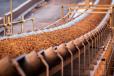
Our world is rapidly transitioning to renewable energy and electric transport systems that require the safe and efficient mining of various metals.

ANSTO conducts and enables research to address some of Australia’s and the world’s most challenging environmental problems.
This month ANSTO is opening its doors to 11 talented young people from across Australia as the two-year Graduate Program kickstarts.

ANSTO publishes amendments to annual reports on this page.
Australia’s new Mo-99 manufacturing facility reaches practical completion
Aboriginal leaders and advocates have joined together today to call out commercial companies exploiting native food knowledge without adequate community engagement.