Tobacco plant has potential to fight life-threatening infectious diseases
Protein found in tobacco plant can target and kill microorganisms,


Showing 901 - 920 of 1815 results
Protein found in tobacco plant can target and kill microorganisms,
ANSTO experts in the measurement of radioactivity and its impacts on the marine environment presented at an IAEA training course for representatives from Pacific Island countries held in early December.
2025 marks the 150th anniversary of the signing of the Metre Convention—a milestone that underscores a century and a half of international collaboration in measurement science. T
ANSTO has unique facilities, capabilities and expertise to investigate materials in extreme environments for applications in energy systems, the defence industry and emerging space sector.
Researchers from the University of New South Wales have developed a new type of rechargeable battery that uses protons as charge carriers, offering a safer and more environmentally friendly alternative to conventional lithium-ion batteries.
Virtual activities celebrating the benefits of nuclear science and technology held for National Science Week


Advances in radon measurement technology by ANSTO researchers over the past decade have enabled the improved characterisation of the composition of pristine air masses that reach Antarctica.


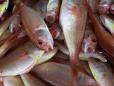
We are using nuclear and other methods to improve the traceability of food to ensure safety and security for consumers and industry, optimise the various functions of food and its production and understand the fundamental mechanisms that link some food to an immune response
Research on the mechanism of cell death has insights to bring progress on neurodegenerative diseases and plant biosecurity.


Melbourne researchers map the structure of a key COVID-19 protein using the Australian Synchrotron
Recent catastrophic Australian bushfires produced extremely high levels of fine particle pollution.
Australia’s new state-of-the-art nuclear medicine facility gets green light.
Neutron scattering has contributed to a 'tour de force' of chemistry led by Monash University.