Insights into Titan’s atmosphere
Terahertz/Far Infrared beamlines assisted investigation into possible composition of lower atmosphere of Saturn's moon Titan.


Showing 921 - 940 of 1515 results
Terahertz/Far Infrared beamlines assisted investigation into possible composition of lower atmosphere of Saturn's moon Titan.
Your efforts are helping better manage our wetlands and waterways, and protect the precious wetland birds that rely on them.
Melbourne researchers map the structure of a key COVID-19 protein using the Australian Synchrotron
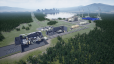
Molten Salt Reactors (MSRs) are nuclear reactors that use a fluid fuel in the form of very hot fluoride or chloride salt rather than the solid fuel used in most reactors. Since the fuel salt is liquid, it can be both the fuel to produce heat and the coolant to transport the heat to a power plant.
The proof of concept for the approach used in the early development of the new gamma-ray imaging system has been published,
An environmental study supported by a citizen science project at ANSTO and UNSW has brought greater understanding of the movement of birds between all of Australia’s major water basins and the importance of the Murray-Darling River Basin.
ANSTO groundwater experts have collaborated with the NSW Department of Planning, Industry and Environment on a comprehensive survey of groundwater resources in the state.
Stable, highly conductive 2D nanosheets of boron nitride promising new material.
An international collaboration led by The University of Sydney and supported by ANSTO has developed an advanced, innovative artificial intelligence application that could be used to help examine tissue samples and identify signs of disease/
Fish farming is increasing globally to provide an affordable source of protein and income security for local communities. Joshua's research project aims to optimise production of tilapia to enhance food and nutritional security in PNG.
Testing at ANSTO’s Centre for Accelerator Science supports an action plan just published by the Australian Packaging Covenant Organisation (APCO) to phase out per- and polyfluoroalkyl substances (PFAS) in fibre-based food contact packaging in Australia by December 2023.
Technique provides insights into historic maritime artefact linked to early exploration of Australia.
Australia and Sri Lanks signs new partnership to fight chronic kidney disease.
This National Science Week, we're acknowledging the 2026 theme, “Seeds of Science: Nurturing knowledge for all” by celebrating the ideas, facilities and people that help scientific knowledge flourish with a series of activities.

On the 10th of October 2025, the Minister for Industry, Science and Technology provided his Statement of Expectations to ANSTO.
Powerful combination of deuteration and neutron scattering used to characterise structure of molecules on surface of nanoparticles.

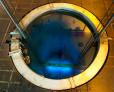
ANSTO operates a range of cobalt-60 gamma irradiators, providing the Australian community with a range of irradiation services for medical, health, industry, agriculture and research purposes.