
Bilby - Small Angle Neutron Scattering
The instrument is very well suited for the study of kinetic effects, like relaxation following a chemical reaction, or external impulses like mechanical deformation, an electric or magnetic field.


Showing 981 - 1000 of 1181 results
The instrument is very well suited for the study of kinetic effects, like relaxation following a chemical reaction, or external impulses like mechanical deformation, an electric or magnetic field.
The outcome could have significant implications for better monitoring, management and remedial action of groundwater globally.
Consortium will map the 86 billion nerve cells, 100 trillion connections and neurotransmitters in the human brain.
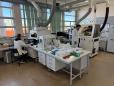
Elemental and trace metal analysis lab is fully equipped with a range of instruments to trace elements and metals in environmental samples.
New oxygen ion conducting material for use in solid oxide fuel cells and other devices
A collaboration of scientists from RMIT, ANSTO and the CSIRO has published pioneering research that brings new insights into intrinsically disordered proteins and protein regions (IDPs)/ (IDRs) and how they behave under various physiological processes.
ANSTO has been awarded an Athena Bronze Institution Award, acknowledging our dedication to improving workplace equality, diversity and inclusion.

Ultra small angle neutron scattering on Kookaburra is used to study the size and shape of objects of size 10 micrometres and below.

New energy technologies, including hydrogen production, are being investigated to achieve decarbonisation.
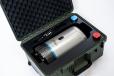
View these case studies for a more detailed look at industry challenges and how CORIS360® radiation imaging technology is improving operational decision making and keeping workers safe.
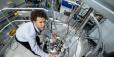
Theinstrument is typically used to study diffusing water molecules or yet larger molecules like polymers or biological molecules. In addition, Emu can reveal quantum-mechanical tunnelling.
ANSTO has been granted a patent in Australia and a number of European countries for the separation, a key radioactive contaminant in critical minerals processing, actinium-227, from process liquors used in minerals extraction.

Prof Lyndon Edwards recognised for for excellent sustained contribution to materials engineering