

Showing 101 - 120 of 189 results
Accelerator technique useful for biomedical engineering
Accelerator technique used in pioneering biomaterials research led by the University of Sydney.
'Atom hunters' broadcast on ABC
Using the past to illuminate the future: Brothers collaborate on important science documentary for ABC TV
Ion channels and chronic pain

Food and health
Consumers want to know that the foods they consume provide health benefits. Food materials science can monitor changes during digestion as well as assist in the development of low-fat products.
Research to extend aircraft fatigue life
Fine particle pollution peaks during bushfires
Recent catastrophic Australian bushfires produced extremely high levels of fine particle pollution.
ANSTO welcomes $13.9M critical minerals funding
Rare earth elements will be a key area of focus for the Australian Nuclear Science and Technology Organisation’s Minerals unit as it welcomes a $13.9 million funding allocation under the Australian Critical Minerals Research and Development Hub
Million-year-old ice core recaptures climate history
Retrieving an Antarctic ice core more than a million years old presents challenges and opportunities.
Statement of Intent
In January 2026, Mr Michael Quigley AM, ANSTO Board Chair, shared ANSTO's Statement of Intent with the Minister for Industry and Innovation, and Minister for Science.
New survey uncovers the crystal building blocks of Saturn’s moon Titan
Researchers from ANSTO and NASA’s Jet Propulsion Laboratory have uncovered the likely mineral composition of Saturn’s largest moon, Titan, revealing a world of exotic organic crystals unlike any found on Earth.
A little bit of the moon just landed at ANSTO
Research on lunar meteorite and moon crater analogues coincides with Science Week.
Cosmogenic nuclides help explain stone formation
China’s vertical sandstone pillars studied using nuclear techniques
Using nuclear techniques to find suitable plants to remediate toxic environments
Technological innovation and partnership needed to make progress on mental disorders
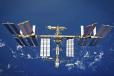
Understanding the full impact of radiation on astronauts
In space, without the protection of the magnetosphere, the type and dose of radiation is considerably different to what is naturally experienced on earth. However, it is the secondary particles of lower energies created when galactic and cosmic radiation interacts with shielding that is of concern for astronauts.
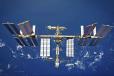
Understanding the full impact of radiation on astronauts
In collaboration with the French National Institute of Health and Medical Research (INSERM) and the French International Space Agency (CNES), ANSTO scientists are undertaking research on the radiobiological effects of secondary particles that are created when radiation interacts with the shielding on the International Space Station.
Research confirms antiferromagnetic order in real quasicrystals
Synchrotron used to find structure of a new material that could be found on the surface of Saturn’s moon Titan
Sydney Access Proposals
View the upcoming proposal deadlines for access to ANSTO’s Research Portal. The User Office provides support for research proposals and enables you to leverage our world-class research infrastructure and facilities.