Understanding landscape evolution in intra-plate areas
Insights into the formation of deep river canyons mountain ranges in intra-tectonic plate areas by SAAFE Scholarship recipient and collaborators.


Showing 101 - 120 of 206 results
Insights into the formation of deep river canyons mountain ranges in intra-tectonic plate areas by SAAFE Scholarship recipient and collaborators.
ANSTO participation in ARC on Intelligent Robotic Systems for Real-time Asset Management has potential benefit in the management of infrastructure and assets
SVSR is seeking a highly motivated engineering candidate with excellent communication skills to help better understand and manage odour emission from sewer ventshafts.

You are invited to submit to the various awards

ANSTO offers access to a range of scholarships, awards, grants and prizes. Find out what's open for application.
A team of researchers from ANSTO and University of Technology Sydney have set a record by conducting thin film experiments at 1100 degrees C.
The ANSTO Awards in Nuclear Science and Technology 2018 were presented on Friday 2 November at The Australian Museum, and showcased ANSTO’s unique nuclear science and technology capabilities, which enable progress in the key areas of health research and innovation for industry.
Useful in some mineral processes but a major problem in others, jarosite may be the key to unlocking the geological history and environmental context of water on Mars.
Zachary Di Pietro, a PhD candidate at the University of Newcastle and AINSE Postgraduate Research Award recipient, has received the 2025 Ezio Rizzardo Polymer Scholarship from the Australian Academy of Technological Sciences & Engineering for his innovative work on synthesising and characterising polymer brushes for ultra-low friction surface applications.
Research indicates that the portable x-ray fluorescence (XRF) is an appropriate analytical technique for determining seafood provenance at external sites.

In space, without the protection of the magnetosphere, the type and dose of radiation is considerably different to what is naturally experienced on earth. However, it is the secondary particles of lower energies created when galactic and cosmic radiation interacts with shielding that is of concern for astronauts.

In collaboration with the French National Institute of Health and Medical Research (INSERM) and the French International Space Agency (CNES), ANSTO scientists are undertaking research on the radiobiological effects of secondary particles that are created when radiation interacts with the shielding on the International Space Station.

You are invited to submit to the various awards from ANSTO, User Advisory Committee (UAC) and Australian Neutron Beam User Group (ANBUG).

Highlights of the Energy Materials Project.
A desire to give people around the world greater access to the benefits of nuclear medicine is behind Robert Raposio and his research into producing radioisotopes in more efficient, cheaper and sustainable ways.
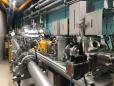
The Medium Energy- X-ray Absorption Spectroscopy beamlines provides access to XANES and EXAFS data from a bending magnet source, optimised for cutting-edge applications in biological, agricultural and environmental science in an energy range that is not currently available at the Australia Synchrotron.