
ASP databases
Datasets from the Aerosol Sampling Program.


Showing 101 - 120 of 152 results
Datasets from the Aerosol Sampling Program.
Australia has one multi-purpose nuclear reactor, the Open Pool Light Water Reactor (OPAL) and it is not used to generate ‘nuclear power’.
In a paper published yesterday, Traditional Owners and researchers report on the oldest securely dated pottery discovered in Australia, located at Jiigurru (Lizard Island Group) on the Great Barrier Reef.
The protein mapping workhorses of the Australian Synchrotron, Macromolecular and Microfocus crystallography beamlines, MX1 and 2, continue to support important biomedical research in the development of vaccines and new therapeutics.

Applications, Recent results, Publications.
Tool developed for producing F-18 radiopharmaceuticals for PET imaging.

The cost of building radiation-hardness testing into the design and qualification of electronics is typically well under one per cent of a major project’s budget.

The BRIGHT Nanoprobe beamline provides a unique facility capable of spectroscopic and full-field imaging. NANO will undertake high-resolution elemental mapping and ptychographic coherent diffraction imaging. Elemental mapping and XANES studies (after DCM upgrade) will be possible at sub-100 nm resolution, with structural features able to be studied down to 15 nm using ptychography.

Data analysis on the X-ray fluorescence microscopy beamline at the Australian Synchrotron.

You are invited to submit to the various awards from ANSTO, User Advisory Committee (UAC) and Australian Neutron Beam User Group (ANBUG).

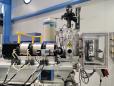
The high-energy heavy-ion microprobe is used for the characterisation or modification of material properties at depths from approximately 1 micrometre to maximum depths of up to 500 micrometres from the material surface.
Monash University is partnering with the Australian Synchrotron and other key institutions to launch a $2.9 million national project – delivering a robotic laboratory capable of drastically speeding up the invention, trials and commercialisation of medicines by Australian researchers.
A new study has found that forest expansion and thickening after British colonisation has created landscapes more prone to burning, amplifying the influence of climate change and propelling Australia’s bushfire crisis.

Dr Peter Kappen manages the Spectroscopy Group at the Australian Synchrotron.

Australian Nuclear Science and Technology Organisation (ANSTO) is committed to protecting your personal information in accordance with the Privacy Act 1988 (Cth) (Privacy Act) and the Australian Privacy Principles.
The Government is safeguarding Australia’s sovereign capability to produce vital nuclear medicines by launching a $30 million project to design a new world-leading manufacturing facility to be built at Lucas Heights in Sydney.