
What are radioisotopes?
Radioisotopes are widely used in medicine, industry, and scientific research. New applications for radioisotopes are constantly being developed.


Showing 101 - 120 of 140 results
Radioisotopes are widely used in medicine, industry, and scientific research. New applications for radioisotopes are constantly being developed.
Highlighting the contribution of four inspirational ANSTO leaders on International Women's Day.
ANSTO is a recognised leader in radiation safety training, offering courses recognised by industry and relevant regulators.

In July 2023, Sateesha stepped into the role of General Manager of the Minerals business unit at ANSTO.
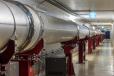
The Imaging and Medical beamline (IMBL) is a flagship beamline of the Australian Synchrotron built with considerable support from the NHMRC. It is one of only a few of its type, and delivers the world’s widest synchrotron x-ray ‘beam’.


ANSTO has a full suite of mineralogical, chemical and hydrometallurgical facilities from laboratory through to pilot scale.
Evidence for existence of a highly exotic and elusive state of matter, known as a magnetic ‘spin nematic’ phase in a natural mineral called linarite.
Radiocarbon dating capabilities at the Centre for Accelerator Science have provided evidence of a 17,300-year old painting of a kangaroo from the Kimberley region.
ANSTO will make an application to the independent nuclear regulator, ARPANSA, to vary its license for its Interim Waste Store. The original operating license was approved in 2015, enabling the facility to hold what is called a TN-81 cask of intermediate-level radioactive waste that was safely repatriated from France in 2015.

ANSTO is committed to monitoring its environmental performance and providing the community with accurate information about it. We also publish live meteorological data from our 49m Lucas Heights weather tower every 15 minutes.

Radiocarbon measurements at ANSTO’s Centre for Accelerator Science have supported research published that provided insights into what the environment was like for the Aboriginal artists who created rock art over intervals spanning 43,000 years.

Dr Anita D’Angelo is a Beamline Scientist for the Powder Diffraction beamline.