


Showing 1001 - 1020 of 1157 results
Code of Conduct: Powder Diffraction Workshop 2022
Code of Conduct: ANSTO-HZB Neutron School

Koala - Laue Diffractometer
Koala is one of the leading small-molecule crystallography instruments in the world for determining the complex crystal structure of a wide range of chemicals and minerals.
Sharing expertise on nuclear forensics
ANSTO has hosted its second IAEA Practical Introduction to Nuclear Forensics Regional Training Course for representatives of member countries from South-East Asia, sharing expertise on the theoretical and practical aspects of nuclear forensics to respond to incidents of nuclear or other radioactive material out of regulatory control.
Nuclear research and medicine in spotlight at NSW Parliament event
Funding supports seafood traceability
Grant supports development of handheld technology to verify origin of seafood.
Radiocarbon is a powerful tracer for ocean circulation and climate studies
Radiocarbon analyses on corals from two sites in Australian waters of the southwest (SW) Pacific has indicated significant changes in ocean circulation in the Pacific and large climate variability during the early to mid-Holocene period (8,000-5,400 years ago).
Patented technology removes key radioactive contaminant in critical minerals processing
ANSTO has been granted a patent in Australia and a number of European countries for the separation, a key radioactive contaminant in critical minerals processing, actinium-227, from process liquors used in minerals extraction.
Studying Western Australian caves to help us understand climate change
On average, there is now 17 per cent less rainfall across Western Australia’s south-western region than was recorded prior to 1970. This rainfall reduction has economic, social and environmental implications for the region, in particular for the growing capital of Perth, as well as water-dependent industries in the state.
Multipurpose research reactor providing radiopharmaceutical
Radioactive phosphorous for implantable medical device to treat pancreatic cancer in global clinical trial
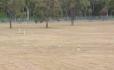
Little forest legacy site
ANSTO is responsible for the Little Forest Legacy Site (LFLS) located within the ANSTO Buffer Zone boundary. This site, formerly known as the Little Forest Burial Ground (LFBG), was used by the Australian Atomic Energy Commission (AAEC) during the 1960’s to dispose of waste containing low levels of radioactivity and beryllium oxide (non-radioactive) in a series of shallow trenches. There has been regular monitoring of the site since 1966 and the results have been reported in ANSTO’s environmental monitoring reports.
Microfluidics: the next wave of disruptive technology in radiochemistry?
Advanced materials research
New oxygen ion conducting material for use in solid oxide fuel cells and other devices
Researchers investigate the symbiotic relationship between mycorrhizal fungi and plants
Finding a balance between killing cancer cells without damaging normal cells
Synchrotron leader shines bright, becoming a Fellow of ATSE
The Australian Academy of Technology and Engineering (ATSE) has elected Professor Andrew Peele, Director of ANSTO’s Australian Synchrotron, to become a Fellow of the prestigious organisation.
Research on proton conductors holds promise for development of clean energy materials
X-rays reveal the key to the effectiveness of new Alzheimer’s drugs
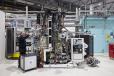
Soft x-ray spectroscopy
Soft x-rays are generally understood to be x-rays in the energy range 100-3,000 eV. They have insufficient energy to penetrate the beryllium window of a hard x-ray beamline but have energies higher than that of extreme ultraviolet light.