Radiochemicals
A summary of all the radiochemicals available at ANSTO.


Showing 1041 - 1060 of 1515 results
A summary of all the radiochemicals available at ANSTO.
A summary of all the nuclear medicine accessories available at ANSTO.

With over 70 years of nuclear expertise, ANSTO offers expert education and training programs

Come and discover the world of nuclear science at ANSTO - book a school tour in Sydney today.

To enable the production of nuclear medicine, ANSTO operates manufacturing, processing and distribution facilities in Sydney.
This week ANSTO formally launched the nandin Deep Technology Incubator, a full-service innovation hub that enables the best and the brightest minds to come together to foster innovation and change.

ANSTO’s commitment to Diversity and Inclusion extends to all events we host or conferences we support through sponsorship, expertise (presenting/speaking) or staff attendance as delegates.

You are invited to submit to the various awards from ANSTO and the User Meeting 2025 organising committee.
Scientists at ANSTO characterise structures with atomic detail using probes such as x-rays, electrons, neutrons and ions.
ANSTO has produced a comprehensive report for the NSW Department of Planning and Environment that represents a significant scientific investigation of the connections, pathways and processes of water loss from the Thirlmere Lakes system.

The Public Interest Disclosure Act 2013 aims to promote integrity and accountability in the Australian Public Sector by encouraging the disclosure of information about actual or suspected wrongdoing, protecting people who make disclosures and ensuring that disclosures are properly investigated and dealt with.
A collaboration of scientists from RMIT, ANSTO and the CSIRO has published pioneering research that brings new insights into intrinsically disordered proteins and protein regions (IDPs)/ (IDRs) and how they behave under various physiological processes.
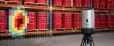
Download the latest software updates for the CORIS360® radiation imaging system.

ANSTO has a full suite of mineralogical, chemical and hydrometallurgical facilities from laboratory through to pilot scale.

COVID-19 is being investigated thanks to our world-class infrastructure, researchers and scientists.

ANSTO has in-house expertise in the operation and development of accelerator systems.