Molecular scaffold
Experiments at the Synchrotron enable researchers to produce a 3D structure of a molecular scaffold with role in cancer


Showing 1061 - 1080 of 2692 results
Experiments at the Synchrotron enable researchers to produce a 3D structure of a molecular scaffold with role in cancer
Melbourne researchers have used the Australian Synchrotron to produce structure of molecule known to play a critical role in the development and spread of aggressive cancer.


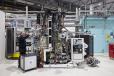
An analysis program for viewing and analysing near-edge X-ray absorption fine-structure (NEXAFS) spectra.

Prarthan is a Fun Loving, Innovation Enthusiast, Design Thinker & Leisure Photographer. He has always been engaged towards generating value, connecting to people globally learning new methods, approaches and learning through experimenting.
An article in Nature Geosciences has highlighted the power of synchrotron techniques to reveal the inner workings of volcanic systems that could potentially help with predictions of eruptions.
New oxygen ion conducting material for use in solid oxide fuel cells and other devices
Imperial College London researchers tapped into ancient geological data locked within precariously balanced rocks using a new technique to boost the precision of hazard estimates for large earthquakes.
Using neutron imaging techniques at ANSTO, researchers from Macquarie University have gained a better understanding of how corrosion forms and spreads through concrete that is commonly used in sewer pipes.
Health researchers have developed a new method for producing PET radiotracers.

Scientists have found a new approach to killing antibiotic-resistant bacteria using lipid nanoparticles that target specific layers on the surface of the bacterial cell.
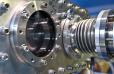
Recoil Time of Flight Spectrometry (RTOF) is used to detect a multitude of elements by separating their masses. unambiguously

ANSTO provides a summary of waste production and consumables for FY2024 - FY2025

ANSTO has supported research led by a University of Sydney team who gained insights into how oil molecules retain their ‘liquid-like’ properties when they are chemically attached as an extremely thin layer to solid surfaces.