

Showing 1081 - 1100 of 2448 results

Lead Scientist - Advanced Diffraction & Scattering beamlines
Role at ANSTO

Reducing cadmium in cocoa
New international limits on the cadmium content of cacao products have spurred research to discover how cadmium accumulates in cacao beans, and the effects of processing.
From the frontline: Dating the ancient past in tiny bites
Celebrating our shining stars of science at the ANSTO Awards
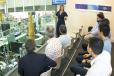
Training at ACNS
We regularly organise and run workshops to support those in the community wanting to understand how neutron scattering techniques can enhance their research. We have two types of courses that we regularly offer.
First SIKA Research Article
Nuclear techniques measure damage in superconducting cables for fusion energy research reactor
Industrial Chemist
Role at ANSTO

Deaf Youth Science Camp 2026
Deaf Youth Science Camp is back for 2026! Deaf Youth Science Camp (DYSC) is a fun 4-day immersive science experience for Deaf/hard-of-hearing young people (aged 12-17 years old). Held at ANSTO at Lucas Heights, Sydney, the camp is a mix of hands-on science activities, outdoor activities and excursions to nearby science centres. Participants will work with Deaf professionals to learn about careers in STEM, develop personal and leadership skills and meet new friends. This camp is hosted by Deaf Youth Australia and ANSTO, and funded by a National Science Week grant.

Radiotracer Methods and Organic Chemistry Task Leader
Role at ANSTO
COVID-19 Global NASA hackathon win
ANSTO-nandin innovation hub win global hackathon challenge from NASA with COVID19 solution.

How we work
Through the development and application of a robust safety management system, ANSTO strives to ensure that risks are as low as possible.

Instrument Scientist - NST Neutron Scattering
Andrew Manning is the 3He Polarisation Instrument Scientist at ACNS, who is responsible for all neutron polarisation capabilities (except for specular polarised neutron reflectometry on Platypus; for this, see Dr. David Cortie).
New radiocarbon calibration curves for a better dating method
The technique of using radiocarbon to establish the age of artefacts and other samples as well as to provide insights on climate, has just been updated with the publication of the new radiocarbon curves.
New round of IAEA Regional Cooperative Agreements projects announced
ANSTO is coordinating and facilitating a new cycle of Australian project proposals for the Regional Cooperative Agreement (RCA).

Infrastructure - Cultural Heritage
In Australia and the Southeast Asia basin, the ANSTO facility offers a wide range of unique nuclear-beam techniques for cultural heritage research.
CEO delivers opening remarks at Symposium
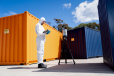
CORIS360® Industry Applications
It is critical across many industries to identify and locate sources of radiation accurately and quickly. By accurately imaging radiation across the full energy range, CORIS360™ improves operational decision making across many industry settings.