
Leader, Nuclear Fuel Cycle Research


Showing 1081 - 1100 of 1815 results

ANSTO’s Radioanalytical Chemistry (RAC) facility combines techniques in radiochemistry and radiological measurement by alpha spectrometry, gamma-ray spectrometry, and liquid scintillation analysis to deliver radiological assessments.
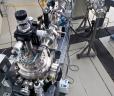
Particle induced gamma-ray emission (PIGE) is typically run in conjunction with PIXE and RBS and is used to quantify concentrations of elements such as lithium, fluorine, sodium, magnesium and aluminium.
Analysing the microstructure of paracetamol using synchrotron infrared optical technique provides insights.
Following a decade of imaging to support research and clinical trials at ANSTO and the University of Sydney’s Brain and Mind Centre at Camperdown, two PET scanners have been transferred to the University of Wollongong.
University of Melbourne researchers have investigated a method to produce magnetic nanoparticles in Australia for use in COVID-19 PCR tests.

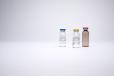

The Australian Industry Becquerel Traceability Program (AIBTP) provides facilities with direct measurement traceability to the Australian standard for the activity of radionuclides used in Positron Emission Tomography (PET).
Evidence for existence of a highly exotic and elusive state of matter, known as a magnetic ‘spin nematic’ phase in a natural mineral called linarite.
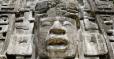
Particle induced X-ray emission can be used for quantitative analysis in archaeology, geology, biology, materials science and environmental pollution.
Ancient groundwater in Australia contributing carbon to food webs through surface water.
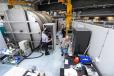
The Platypus instrument can be used to study all-manner of surface-science and interface problems, particularly related to magnetic recording materials and for polymer coatings, biosensors and artificial biological membranes.

Do you love science? Here is a competition for you that combines chemistry and creativity! Discover the world of elements and create a poster for your favourite element in this new competition for school aged students.
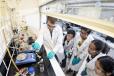
Winners of the Big Ideas Competition 2021