Showing 1121 - 1140 of 2448 results
New class of hydrogen conductors for industry
New class of conducting materials found for potential use in next generation fuel cells and other applications.
Graduate Profile – Vienna Wong
PhD candidate Vienna Wong is using her FutureNow Scholarship to research ultra-high temperature ceramics, which are emerging materials for extreme environments.

Highlights - Magnetism
Highlights of the Magnetism Project.

Industrial Liaison Manager - Senior Research Scientist
Role at ANSTO

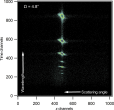
Kookaburra (Ultra-Small-Angle Neutron Scattering)
Role at ANSTO
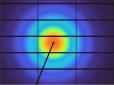
Biological small angle X-ray scattering beamline (BioSAXS)
The Biological Small Angle X-ray Scattering beamline will be optimised for measuring small angle scattering of surfactants, nanoparticles, polymers, lipids, proteins and other biological macromolecules in solution. BioSAXS combines combine a state-of-the-art high-flux small angle scattering beamline with specialised in-line protein purification and preparation techniques for high-throughput protein analysis.
Shining a light on big data in the West
ANSTO awarded an Athena Bronze Institution Award
ANSTO has been awarded an Athena Bronze Institution Award, acknowledging our dedication to improving workplace equality, diversity and inclusion.
ANSTO’s Regional Cooperation
Neutron scattering helping conserve the world’s great historic monuments
Leadership changes at ANSTO
This afternoon, the Chair of ANSTO, Dr Annabelle Bennett, wrote to all staff to let them know that CEO Dr Adi Paterson has decided to resign. She said the Board is deeply appreciative of the contributions Adi has made, including to the health, research and academic outputs of ANSTO during his tenure. Mr Shaun Jenkinson will continue as Acting CEO, while the Board undertakes a global search for a permanent CEO.
A changing of the guard in the 2018 ANSTO Top Coder Competition
The winners of the 2018 ANSTO Top Coder Competition were decided at two keenly contested grand finals with Robotics hosted by UTS and Coding held at the ANSTO Discovery Centre.
Reappointment of the Chief Executive Officer

Research Publications
ANSTO provides a list of journal, book, technical and conference publications associated with the Australian Centre for Neutron Scattering, and the Centre for Accelerator Science.
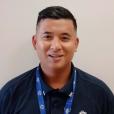
Radioactive Waste Supervisor
Mitchell Timpano is a Radioactive Waste Supervisor leading the decontamination team in ANSTO’s Waste Management Services.
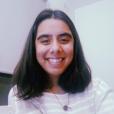
Masters of Design Student - Swinburne University
Being in her final year of Masters of Design at Swinburne University, Pratibha started her journey as a Lifestyle Product designer. With an itch of curiosity, she has been expanding her knowledge base into multiple areas of design.
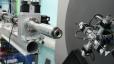
Sample Environments
Sample environment types that are available on the Powder Diffraction beamline.
Training session highlighted an approach to calculate the ingested dose of radionuclides in seafood
Dr Mathew Johansen, an environmental scientist at ANSTO, presented in an online IAEA training workshop on Advanced Topics in Radiochemistry Techniques this week.