Physicist to become surrogate inspector
Young physicist in training to become a surrogate inspector for Comprehensive Nuclear Test Ban Treaty Organisation.


Showing 1161 - 1180 of 2069 results
Young physicist in training to become a surrogate inspector for Comprehensive Nuclear Test Ban Treaty Organisation.
Detailed molecular structure of silver nanocrystals determined
Report to the independent nuclear regulator, ARPANSA, and the IAEA

Recommended accommodation and transport information.
Scientists have found a new approach to killing antibiotic-resistant bacteria using lipid nanoparticles that target specific layers on the surface of the bacterial cell.
Invisible deuterated detergents revealed
ANSTO has an association with Ouranos Systems, a company that is developing robust nuclear-based power solutions for satellites and space vehicles.
Protein found in tobacco plant can target and kill microorganisms,
Australia’s Nuclear Science and Technology Organisation (ANSTO) is well-known for facilitating incredible science and creating life-saving nuclear medicines, but for the last 40 years it’s been quietly producing a largely unsung net zero hero: Neutron Transmutation Doped (NTD) silicon.
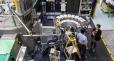
Wombat is a high intensity neutron diffractometer that is primarily used as a high-speed powder diffractometer, but has also expanded into texture characterisation and single-crystal measurement, particularly diffuse scattering.
Win an awesome science experience! Prize includes flights, travel, accommodation, and meals. Our Big Ideas competition is opening soon and encourages students to creatively communicate the work of an Australian scientist, and explain how their work has inspired them to come up with a Big Idea to make our world a better place. This competition is intended to engage and support Australian students in years 7-10 in Science and encourage them to pursue studies and careers in STEM.
Phase contrast tomography shows great promise in early stages of study and is expected to be tested on first patients by 2020.
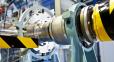
Elastic Recoil Detection Analysis (ERDA) is used principally as a method for measuring hydrogen in thin layers, and in the near-surface region of materials.