Reconstructing the history of coastal erosion
Research makes it possible to assess if and how rocky coasts, which make up the majority of the world’s coasts including Australia and New Zealand, will respond to changes in marine conditions.


Showing 1161 - 1180 of 1815 results
Research makes it possible to assess if and how rocky coasts, which make up the majority of the world’s coasts including Australia and New Zealand, will respond to changes in marine conditions.
Researchers from the University of Wollongong have improved a high voltage cathode material to deliver structural stability and an unprecedented electrochemical performance for lithium-ion batteries (LIBs) in work that is extendable to other types of energy storage materials.
Thales Australia, a key supplier to the Australian Defence Forces, provided an industrial challenge to National Graduate Innovation Forum participants relating to the production of piezoelectric ceramic components used in naval sonar arrays and systems.
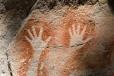
Over the last decades, neutron, photon, and ion beams have been established as an innovative and attractive investigative approach to characterise cultural-heritage materials.

A selection of research highlights, instrument news and technical developments for scientists.
One of ANSTO’s most accomplished scientists and internationally recognised energy researchers, Prof Vanessa Peterson, has been awarded the Nancy Millis Medal for Woman in Science by the Australian Academy of Science this week.

Mitchell Timpano is a Radioactive Waste Supervisor leading the decontamination team in ANSTO’s Waste Management Services.

Learn about isotopes using real examples and real data, including comprehensive isotopic data of the first twenty chemical elements in the periodic table (hydrogen to calcium).
Students will:
- learn how the number of neutrons and protons in an isotope affects its nuclear properties
- construct a section of the Table of isotopes, using MS Excel
- investigate the properties and uses of different isotopes
A collaboration of scientists from RMIT, ANSTO and the CSIRO has published pioneering research that brings new insights into intrinsically disordered proteins and protein regions (IDPs)/ (IDRs) and how they behave under various physiological processes.
ANSTO will make an application to the independent nuclear regulator, ARPANSA, to vary its license for its Interim Waste Store. The original operating license was approved in 2015, enabling the facility to hold what is called a TN-81 cask of intermediate-level radioactive waste that was safely repatriated from France in 2015.
On average, there is now 17 per cent less rainfall across Western Australia’s south-western region than was recorded prior to 1970. This rainfall reduction has economic, social and environmental implications for the region, in particular for the growing capital of Perth, as well as water-dependent industries in the state.


This resource guides students through how to interpret and analyse authentic research data, generated during a collaborative project between UNSW, UTS, ANSTO and Taronga Zoo Sydney. The project examines the use of high-resolution x-ray fluorescence as a tool to combat the international illegal wildlife trade (IWT) of short beaked echidnas, which are being removed from the wild and claimed as captive-bred.
Students will:
- examine the adaptations of short beaked echidnas that increase their ability to survive in their environment
- explore the use of technology in contributing to the study and conservation of biodiversity
- construct simple graphs of the provided data using MS Excel, and interpret and analyse these graphs
- investigate how scientific knowledge interacts with social, economic, cultural and ethical issues.
Participate in live radiation demonstrations, cover syllabus content and visit ANSTO virtually during our online depth study classes for Year 11 Chemistry.
- Investigate properties of different radioisotopes and learn about their uses in medicine, industry and environmental research.
- Consider the scientific method and gather data during a live radiation experiment.
- See some of Australia's largest scientific infrastructure, including the OPAL multipurpose reactor.
Cost: $90 per class.
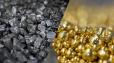
Bring the periodic table to life in this interactive videoconference lesson.
Students see real samples of common elements, learn about their history, properties and uses, and find out how the periodic table was developed during the 19th century.
Students review atomic structure, elements and the organisation of today's periodic table, before applying their knowledge and skills in a fun periodic table game.
Cost: $90 per class.
Radiocarbon dating of mud wasp nests was used as an indirect method of dating the Gwion Gwion style.
Rutherford backscattering primarily provides information about the concentration of elements VS depth in a light material.
Neutron scattering helps clarify the arrangement of magnetic vortices, skyrmions, in material